
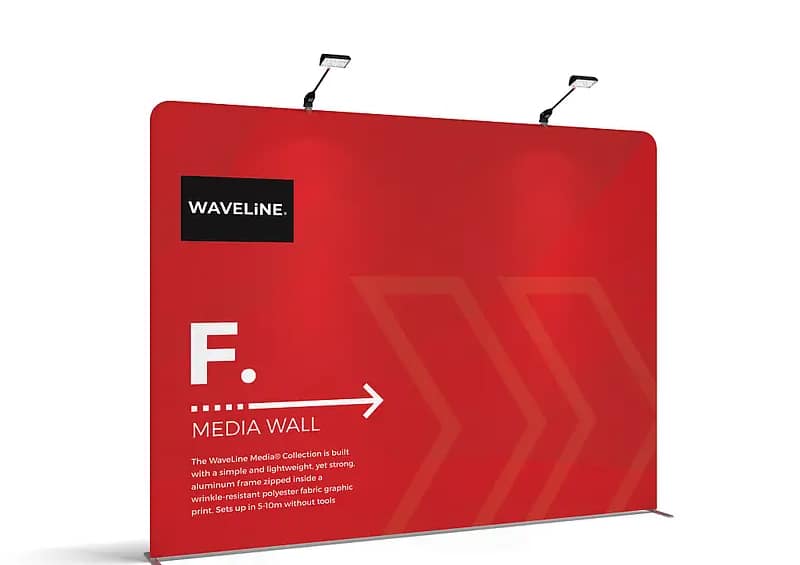
Waveline Media Banners: A Comprehensive Buying Guide
Many Australian exhibitors underestimate how much their banner choice can undermine an otherwise well-planned event. Choosing poorly specified Waveline Media Banners can reduce visibility, limit foot traffic, and quietly drain your trade show budget over multiple campaigns. In crowded expo halls from Sydney to Perth, fabric trade show displays are now standard, yet they are still often treated as disposable. This mindset leads to fragile hardware, inconsistent colour reproduction, and systems that struggle to survive even a single national events season.
Understanding the Risk of Choosing the Wrong Trade Show Banner
The most overlooked risk is not simply an unattractive stand, but a display that fails to support broader trade show marketing tools and objectives. When frames wobble, fabric sags or graphics fade under venue lighting, visitors draw instant conclusions about your professionalism. Poorly chosen portable trade show signage can also slow down setup, forcing your team to focus on repairs instead of conversations with prospects. Over time, this misalignment between marketing intent and on-stand reality erodes return on investment.
Why Banner Quality Matters for Australian Exhibitors
Quality issues typically surface at the worst possible moment: bump-in morning when timelines are tight and freight delays are common. Lightweight event backdrops built from thin aluminium can bend during interstate freight, causing visible distortion in your graphics. Inferior fabric may show severe creasing that never fully stretches out, particularly in tension fabric banner systems. In large venues like the Melbourne Convention and Exhibition Centre, harsh overhead lighting can wash out colours if print methods and fabric weight are not carefully matched to the environment.

Common Warning Signs You’re Buying the Wrong System
There are clear signals that a banner system may not withstand Australia’s event circuit. If a supplier cannot specify fabric composition, print process, or frame grade, durability is likely compromised. Vague assembly instructions often mask fiddly connectors that slow down installation and increase the chance of breakage. The absence of a padded carry case is another red flag, especially for reusable event display kits travelling regularly by courier. Limited sizing options may also force awkward layouts within standard shell schemes, wasting valuable floor space.
- No clear details on fabric weight, print method, or frame material
- Assembly requiring multiple tools or several staff to manage safely
- Lack of fire-retardant certification suitable for Australian venues
- No protective case for transport between capital cities
- Limited options to refresh graphics without replacing the entire system
Hidden costs surface when cheaper systems quickly fail, forcing unplanned reprints or emergency hires just before a major conference. Marketers often overlook the long-term benefits of modular exhibit graphics and custom display solutions that can be reconfigured across different floor plans. Robust frames that can be reskinned allow teams to update campaigns without fully re-investing each season. For brands running multiple events, from regional roadshows to branded conference displays, these efficiencies compound over time and protect budgets.
Australian organisers also need to consider compliance and practicality, not just design. Fabrics should meet relevant fire standards, particularly for indoor venues and custom portable backdrops positioned near lighting rigs. Systems must pack down into cases that fit standard vehicles or freight guidelines, especially for portable banner stands used by small teams. When requirements are unclear, consulting specialists in Waveline Media Banners can clarify sizing, scheduling, and how portable trade show signage fits into broader custom portable backdrops and reusable event display kits. Before your next expo, assess how your current setup performs and speak with an expert to avoid repeating costly mistakes at future events.


