
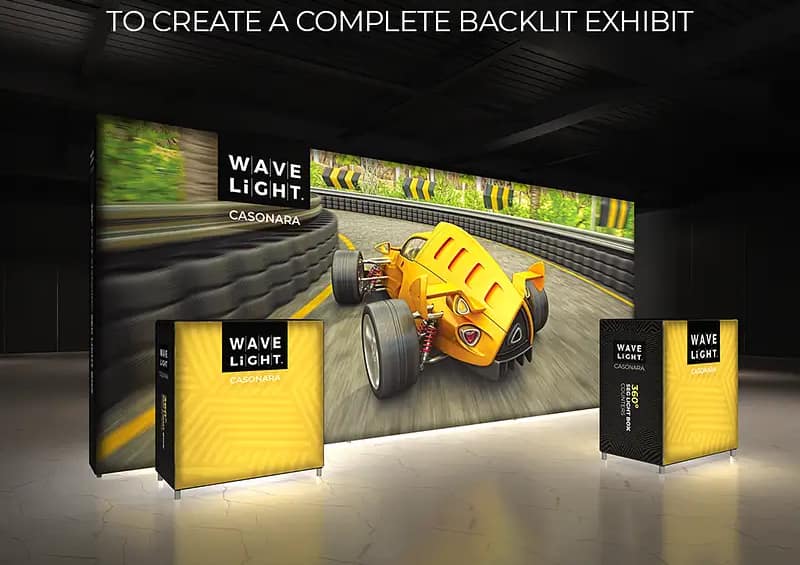
WaveLight Casonara Banners are drawing increasing attention across Australian expos and conferences, not just for their visual punch but for the problem they quietly expose: underperforming event signage. In busy venues with mixed or low lighting, traditional pull-up banners and foam boards struggle to compete, leaving brands literally and figuratively in the dark. As marketing budgets tighten, many organisations are discovering that flat, non-illuminated graphics are a hidden weak link in their event strategy.
The Visibility Gap in Modern Event Halls
Most exhibition centres are crowded, visually noisy environments where attendees scan quickly and move on. Under uneven spotlights or dim corners, older portable banner solutions can appear dull, washed out or partially obscured. This visibility gap is amplified when neighbouring stands use backlit fabric display systems that punch through ambient light. The result is a subtle but persistent disadvantage for brands relying on dated hardware and tired printed materials.
How Traditional Signage Undermines Event ROI
For Australian marketers flying teams interstate, hiring floorspace and freight, every missed interaction hurts. When signage fails to stand out, staff must work harder to draw visitors in, while premium illuminated banner stands nearby naturally attract more passing traffic. Over an annual events calendar, this compounds into fewer qualified leads, weaker brand recall and a declining return on investment. The issue is not only aesthetic; it is a structural drag on performance.

Warning Signs Your Displays Are Falling Behind
There are clear indicators that current event signage options may be holding a brand back. Stands that photograph dark or flat, even when staffed and busy, hint at insufficient illumination. Teams often report that visitors “nearly walked past” before noticing the booth, especially in national trade show circuits. Creased vinyl, warped panels and visibly faded colours signal wear that audiences subconsciously associate with dated or less professional operators.
- Booth images on social media appear dim compared with neighbouring stands
- Event staff rely heavily on verbal outreach just to capture basic attention
- Signage is heavy, awkward to pack and prone to damage in transit
- Replacement prints are ordered more often than originally budgeted
- Competitors use trade show lightbox displays that visually dominate shared aisles
Behind these symptoms sit familiar causes: ageing hardware, one-size-fits-all kits and limited awareness of newer custom fabric displays that travel lighter and last longer. Many organisations also underestimate how much portable illuminated event signage influences dwell time and photo shareability. Modern systems such as Waveline Casonara Banners highlight this gap by combining internal LEDs, taut textiles and reusable exhibition display solutions that can be refreshed campaign after campaign.
Industry-wide, there is also a misconception that advanced modular SEG light boxes or double-sided backlit graphics are only for large corporates. In reality, more mid-sized Australian brands are adopting tool-free modular display frames and other backlit fabric display systems as core assets rather than one-off splurges. For teams planning multi-city roadshows, assessing current event signage now can prevent another year of underpowered visibility and incremental wastage. Before your next peak season, consider requesting expert guidance on smarter event signage options so your stand is working as hard as your staff.


