
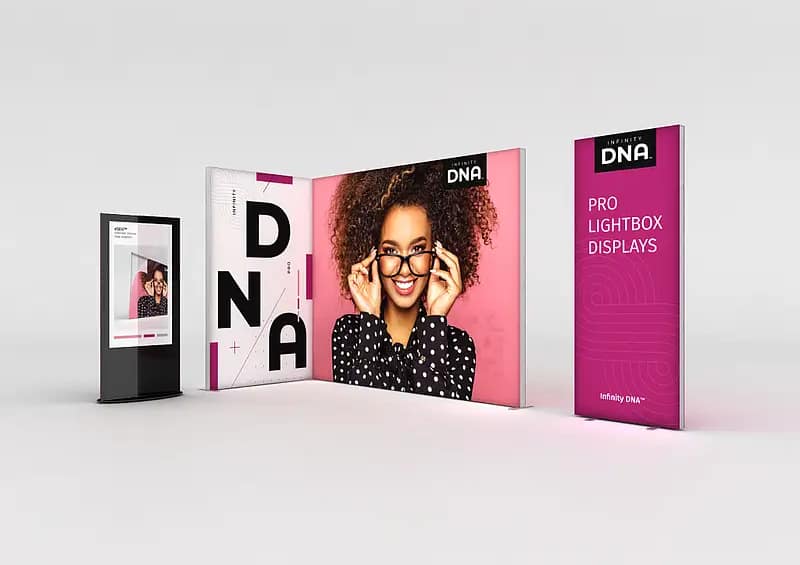
The Importance of SEG Fabric in Infinity DNA™ Pro Lightboxes is rising as Australian retailers seek sharper, more flexible illuminated signage options for high-pressure environments. As shopping centres, pop-up activations and exhibitions become more visual, brands are moving away from rigid panels toward textile-based systems that can handle constant campaign changeovers. In this context, silicone edge graphics are emerging as a practical middle ground between premium presentation and operational efficiency. Understanding how this technology works, and where it fits alongside other LED display solutions, is now central to smart visual merchandising decisions.
The Importance of SEG Fabric in Infinity DNA™ Pro Lightboxes
At the heart of SEG fabric lightbox graphics is a tensioned textile that locks into an aluminium frame via a slim silicone gasket. When paired with high-output LEDs and reflective backing, the result is a frameless, edge-to-edge image that looks almost weightless in store windows or mall corridors. For national retailers, the ability to ship folded fabric rather than bulky rigid panels can cut freight costs and simplify logistics. It also reduces damage risk, helping protect campaign budgets during busy seasonal rollouts. For brands chasing consistent colour reproduction, dye-sublimated polyester fabrics deliver smooth gradients and reliable skin tones for fashion or beauty storytelling.
How SEG Fabric Works in Modern Lightbox Systems
SEG fabric is typically produced using dye-sublimation or direct-to-fabric printing, bonding inks deep into polyester fibres instead of sitting on the surface. This process supports long-lasting colour and a soft, textile finish that photographs well for social media and retail LED branding displays. Once on site, installers press the silicone edge into a narrow channel around the frame, creating tension that pulls out ripples and shadows. This flat surface is critical for even backlighting, especially in premium LED lightbox systems where hotspots can undermine an otherwise high-end execution. For in-centre rollouts, fire-rated fabrics and opaque backers are often specified to comply with landlord and safety requirements.

Comparing SEG Lightboxes with Other Display Options
Australian marketers typically benchmark SEG systems against pull-up banners, PVC skins and rigid acrylic panels when planning illuminated signage options. Pull-ups offer low entry cost but show creases, glare and limited visual impact in bright malls. PVC skins can warp, yellow or crack under strong lighting, while rigid acrylic panels add weight and increase the risk of edge damage in transit. In contrast, an Infinity DNA™ Pro Lightbox allows fabric skins to be folded or rolled, stored compactly, then re-skinned onto existing frames as campaigns change. For networks managing backlit trade show displays and in-store campaigns simultaneously, this reuse factor can materially lower total cost of ownership.
- SEG systems can be scaled from small window visuals to large-format custom lightbox designs across multiple sites.
- Frames can integrate into modular illuminated signage programs, supporting phased upgrades rather than full fit-out replacements.
- Some ranges support tool-free lightbox assembly, reducing installation downtime in live retail environments.
- Portable exhibition lightboxes using SEG fabric help touring brands maintain consistent presentation from venue to venue.
- Custom illuminated display frames can be engineered to fit challenging architectural spaces or heritage façades.
When assessing SEG fabric lightbox graphics, decision-makers should weigh factors such as GSM, opacity, fire rating and print method against campaign goals and tenancy rules. Heavier fabrics may provide better structure, while higher opacity helps hide frame components and LED arrays. For multi-site brands, colour consistency and fabric batch control become crucial to ensure national campaigns appear uniform across all locations. Many retailers now specify modular systems that can support both window hero moments and in-store wayfinding, consolidating their illuminated signage options into one versatile platform. For organisations considering a mix of SEG and other display types, early consultation with a display specialist can clarify where each solution delivers the best value.
For Australian brands planning new retail formats or national campaigns, engaging an expert early can prevent mismatched hardware, over-specified components or short-lived solutions. A specialist can audit existing fixtures, map opportunities for retail LED branding displays, and recommend whether SEG-based premium LED lightbox systems should sit alongside, or replace, current signage. They can also model the cost implications of seasonal re-skins, sustainability goals and storage constraints over multiple years. If you are weighing SEG fabric against other illuminated signage options, consider booking a consultation with a retail display specialist to compare configurations and identify which mix of systems will best support your brand, campaign calendar and on-the-ground teams.