
WaveLight Casonara Lightboxes vs. Traditional Displays: A Comprehensive Comparison
Australian exhibitors are rethinking how they present their brands, weighing up WaveLight Casonara Lightboxes vs. Traditional Displays in increasingly competitive venues. Under harsh hall lighting and crowded aisles, older pull-up banners and printed boards can struggle to command attention. By contrast, illuminated display solutions promise brighter graphics, sharper colours and stronger recall. Understanding how each option works, and where it performs best, is essential for marketers planning their next trade show, retail activation or roadshow.
Understanding the shift in exhibition displays
Trade shows and events across Australia are seeing a steady move from static signage to premium illuminated trade show displays. Exhibitors want stands that look modern, photograph well and can be reused across multiple campaigns. At the same time, tight bump-in windows, rising labour costs and limited storage space put pressure on teams to choose portable advertising displays that are quick to assemble. Against this backdrop, backlit systems are emerging as a compelling alternative to traditional pull-up banners, corflute panels and MDF walls.
What is a WaveLight Casonara Lightbox?
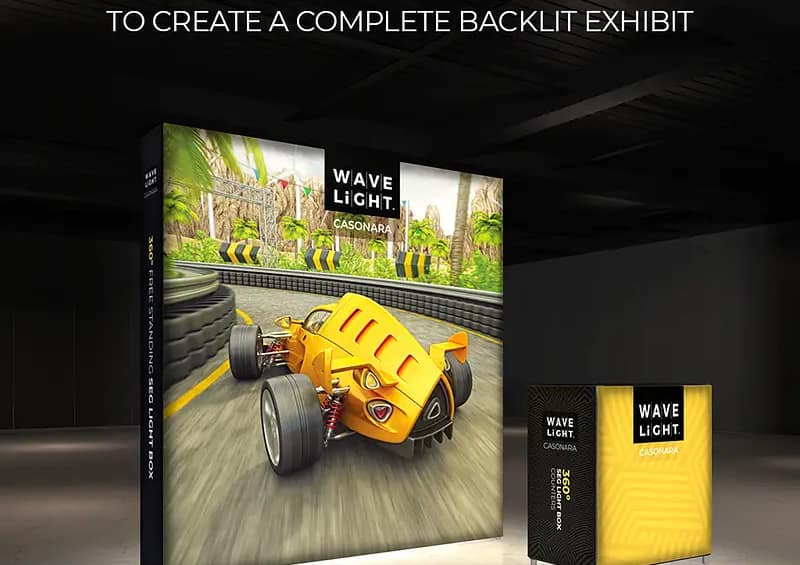
A WaveLight Casonara Lightbox is a freestanding or wall-mounted aluminium frame fitted with internal LEDs that evenly backlight a printed fabric skin. The result is a bright, edge-to-edge surface that stands out even in dim or visually busy halls. These tool-free aluminium display frames are designed to break down into compact components for easy transport between events. Many models support seg fabric lightbox graphics, allowing marketers to swap campaigns while retaining the core hardware.

WaveLight Casonara Lightbox vs. traditional displays
Traditional banners and boards rely entirely on venue lighting, which can leave colours muted and messages harder to read from a distance. A backlit frame, by contrast, directs light through the graphic, delivering higher contrast and more consistent visibility across the stand. Compared with clip-on halogen spots, energy-efficient retail lightboxes typically draw less power and create fewer shadows. From a logistics perspective, reusable exhibition lightbox frames and portable illuminated booth backdrops reduce freight volume, setup time and reliance on contractor tools. For brands planning custom lightbox designs or modular LED lightbox systems, this flexibility can significantly improve long-term return on investment.
- Traditional pull-up banners remain cost-effective for one-off community expos or tight budgets.
- Corflute and rigid boards suit simple directional signage or outdoor wayfinding where illumination is less critical.
- WaveLight Casonara Lightboxes provide stronger impact in low-light exhibition halls and media-heavy brand activations.
- Double-sided illuminated branding walls help maximise visibility on corner sites or shared aisles.
- Portable advertising displays with reusable frames allow graphics to be refreshed without replacing the entire structure.
When comparing options, marketers should consider visitor traffic, lighting conditions, frequency of use, storage capacity and future campaign changes. Portable illuminated booth backdrops may justify higher upfront spend if they are used at multiple national shows each year. For regional tours or short campaigns, simpler traditional signage might remain adequate. In many cases, a hybrid approach works best, combining fabric lightboxes on the hero wall with supporting banners elsewhere. Speaking with an exhibition specialist can clarify which mix of WaveLight Casonara Lightboxes vs. Traditional Displays fits your stand size, budget and long-term plans. To move forward confidently, book a consultation with a specialist team and compare configurations before committing to your next event build.


