
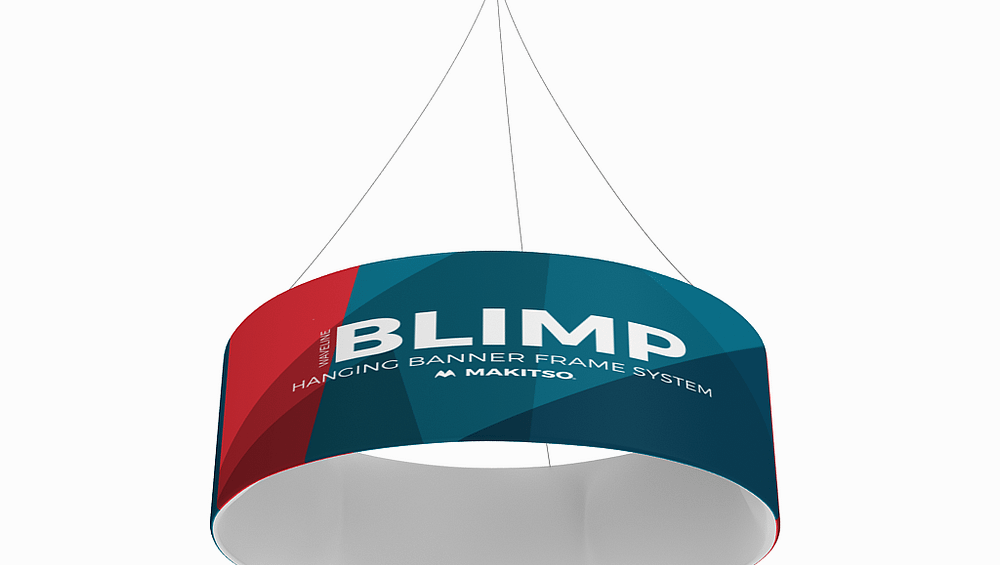
The Latest Trends in Hanging Banners for 2026 Exhibitions
The latest trends in hanging banners for 2026 exhibitions are reshaping how Australian brands plan their trade show presence. As major venues from Melbourne to Sydney return to full capacity, exhibitors are facing fierce competition for attention above increasingly crowded aisles. Overhead signage is emerging as critical real estate, allowing marketers to claim visibility without sacrificing valuable floor space or stand area. For teams under pressure to justify every event dollar, ceiling-mounted branding is fast becoming a strategic investment rather than a nice-to-have.
Why overhead signage now drives exhibition strategy
Organisers across Australia report visitors are more selective, spending less time on the floor but expecting more targeted experiences. In this context, hanging banners act as beacons that can be seen from multiple aisles, drawing the right people before they reach decision points. They also support wayfinding, helping visitors quickly locate key categories, product launches or demo zones. When thoughtfully planned, overhead signage gives sales teams a running start, warming prospects with brand familiarity before the first conversation begins.
New materials and soft signage dominate ceilings
The shift from rigid plastics to fabric-based systems is one of the most visible changes in Australian Hanging Exhibition Displays. Dye-sublimated polyester and textiles made from recycled PET are increasingly standard, offering lighter freight weights and neater storage between events. These soft graphics are glare-free under harsh exhibition lighting, which means brand colours remain consistent to the eye and on camera. For marketers, the ability to fold graphics rather than ship bulky rolls can also trim logistics costs across a national events calendar.
Suspended Fabric Banners are particularly popular for brands investing in large spans and complex shapes. Different textile weights allow exhibitors to specify ultra-light fabrics for expansive rings, block-out materials for bright pavilions, or mesh options for semi-outdoor activations. This level of control helps ensure artwork remains legible from 30 to 50 metres away, even when competing with LED screens and digital installations. The result is a cleaner, more premium visual field that photographs well and supports social media coverage.
- Growing use of recycled and PVC-free fabrics for ceiling graphics
- Modular aluminium frames replacing one-off custom overhead builds
- Increased adoption of backlit and edge-lit banner systems
- Smarter shapes such as stacked cubes and layered rings to tell vertical stories
- Integration of QR codes and clear calls to action for measurable lead capture
In 2026, every square metre of ceiling space is expected to earn its keep — visually, sustainably and in measurable lead generation.
Sustainability and modular engineering take the lead
ESG reporting is now filtering directly into events budgets, with marketing teams expected to show how exhibition assets support sustainability targets. Suppliers are responding with PVC-free fabrics, water-based inks and take-back programs that recycle or repurpose outdated graphics. At the same time, modular hanging banner structures built from lightweight aluminium are replacing heavy, bespoke frames that only work once. These systems allow teams to re-skin the same framework across different stand sizes and show themes.
For brands running multi-city programs, this modularity makes it easier to maintain consistent large-format ceiling graphics from Sydney to Brisbane without rebuilding from scratch. It also reduces freight costs and installation time, as frames pack flat and graphics fold into compact cases. When combined with double-sided hanging banners, exhibitors can maximise visibility along intersecting aisles while keeping their hardware inventory lean. The net effect is a more sustainable footprint that also supports better return on investment.
Lighting technology is adding another layer of efficiency to these modular systems. Many Australian teams are opting for curved overhead display systems with integrated LEDs, ensuring their branding stays bright even in dim corners of a hall. Edge-lit profiles and halo lighting can be added to simple shapes like squares or cylinders, transforming otherwise standard forms into attention-grabbing landmarks. This approach allows marketers to refresh visual impact each season without discarding the core structure.
Careful planning of rigging points for overhead displays is essential to unlock these design possibilities. Each venue has strict guidelines on maximum load, fixing locations and clearance from sprinklers or house lighting. Partnering with a supplier familiar with venue-compliant ceiling signage can prevent last-minute redesigns and unexpected engineering charges. Early coordination also helps avoid clashes with neighbouring Overhead Trade Show Displays, ensuring your structure remains the dominant feature in shared sightlines.
In parallel, exhibitors are becoming more sophisticated in how they use forms and formats. Fabric cylinder exhibition signs remain popular for island stands that need 360-degree presence, while lightweight suspended signage in triangular or square profiles continues to perform strongly for corner sites. Increasingly, designers are stacking shapes or offsetting cubes to build vertical storytelling, such as tiered messaging that moves from brand promise at the top to product proof points closer to the stand. This layered approach can be especially powerful when aligned with on-stand demonstrations.
One of the most important shifts in 2026 is the move from passive branding to active lead generation. Marketers are embedding concise QR codes into Hanging Banners, linking visitors to show-only offers, demo booking forms or digital brochures in just a few taps. Short prompts such as “Scan to book a consult today” or “Save the full spec sheet” give time-poor visitors a clear reason to act. When paired with stand numbers and directional arrows, overhead graphics double as wayfinding and sales tools in a single asset.
To make this work, message hierarchy is critical. Large, legible typography must be visible at distance, often supported by simple icons rather than dense copy. Many teams are aligning their ceiling messaging with on-stand screens that display matching calls to action, creating a seamless journey from first glance to data capture. Marketing automation then nurtures these contacts after the show, giving events teams clearer attribution on which banners, offers and campaigns generated the most qualified leads.
For Australian marketers balancing creativity, compliance and cost, the right partner can make a significant difference. Look for providers who can visualise venue layouts in 3D, stress-test concepts against traffic flows and advise on safe yet impactful rigging options. Ideally, the same team can manage production, storage, refurbishment and redeployment of assets across your full annual schedule, reducing the risk of damage or inconsistency. Businesses seeking deeper strategic support often turn to specialists in Hanging Banners who understand both print technology and exhibition behaviour.
As competition intensifies, the latest trends in hanging banners for 2026 exhibitions are less about spectacle and more about strategic clarity. Future-focused exhibitors are combining soft signage, modular frames and targeted messaging to build overhead ecosystems that work harder at every show. By planning early, aligning with sustainability goals and designing for measurable engagement, your brand can turn ceiling space into one of the most effective parts of your marketing mix. Ready to transform your exhibition visibility for 2026? Enquire today to discuss a custom overhead signage strategy tailored to your brand, venues and national event schedule.


