
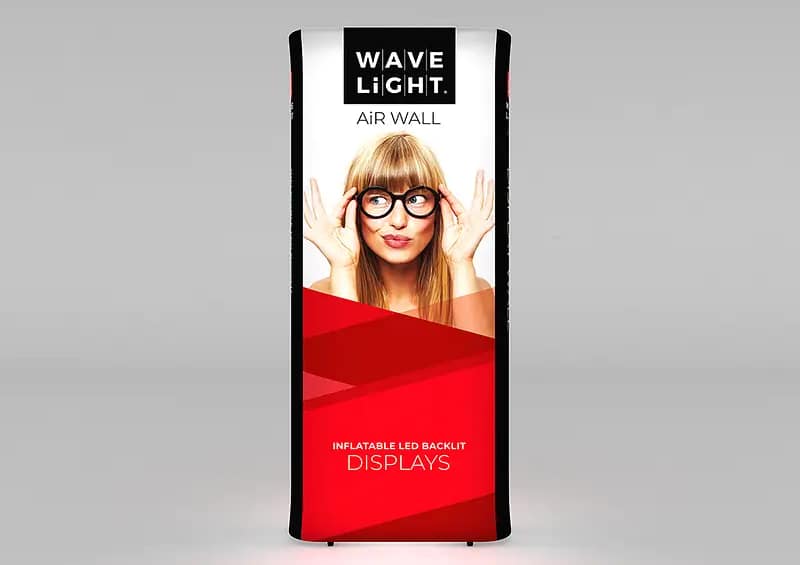
Comparing WaveLight® Air Wall Lightboxes to Pop-Up Displays helps Australian exhibitors choose the right portable backdrop for trade shows, shopping centre activations, and corporate events. Both options are designed for easy transport and quick installation, yet they deliver very different levels of visual impact, flexibility, and long-term value. Understanding how each system works will help you match your display to your brand, venues, and event schedule.
Understanding inflatable lightboxes and pop-up displays
WaveLight® Air Wall Lightboxes are backlit inflatable LED walls that use internal lighting to illuminate a printed fabric skin. This creates evenly illuminated fabric displays that stand out in dimly lit exhibition halls and busy event aisles. Traditional pop-up displays, by contrast, use a collapsible frame with front-lit graphic panels and rely on the venue’s ambient lighting. While both systems are portable, the way they attract attention and present branding is quite different.
Why backlit inflatable displays create higher impact
An inflatable LED display system delivers a strong visual presence because light is projected through the fabric from within, minimising shadows and hot spots. This effect is ideal for premium product launches, technology demonstrations, and high-traffic expo stands where first impressions matter. Compared with a standard backdrop, portable advertising lightboxes can help images appear sharper and colours richer, which supports a more professional brand perception. For marketers competing in crowded venues, that extra glow can significantly increase stand visibility.

Strengths and limitations of traditional pop-up displays
Pop-up displays remain popular in Australia because they are cost-effective, familiar, and quick to assemble using scissor frames and clip-on panels. For smaller regional expos and venues with strong built-in lighting, they can still create a tidy, professional backdrop for information desks or community stands. However, they offer less depth and drama than SEG fabric light walls, and graphics may appear flatter in darker environments. If your brand relies heavily on visual storytelling, a simple pop-up may not deliver the desired impact.
Key considerations when choosing your display system
Before investing, review your annual event calendar, typical venue lighting, and how often you update campaigns. A WaveLight® Air Wall Lightbox with reusable event lightbox hardware can be cost-effective over multiple activations because you can swap out skins for new campaigns. Consider the practicality of tool free lightbox setup if your team travels frequently and needs rapid pack-in and pack-out. Also think about whether you require a custom illuminated wall backdrop or prefer a simpler, lower-cost option for infrequent exhibiting.
Matching display solutions to your branding strategy
Premium, design-led brands often favour custom wall light solutions that mirror their in-store or digital aesthetic at events. In these cases, lightweight branded light panels or a portable trade show lightbox can reinforce innovation and quality. Organisations focused on education, government outreach, or local community events may find standard pop-up displays sufficient for clear messaging. If you exhibit across both high-profile and low-key events, combining systems can work well, with backlit walls reserved for hero occasions.
To decide confidently between these display options, start by clarifying your event environments, branding priorities, and setup resources. Comparing brightness, flexibility, and long-term costs will help you choose a system that supports your objectives rather than simply filling space behind a stand. If you are unsure which configuration best suits your program, speak with a display specialist who can walk you through sizes, layouts, and print options. Use their guidance to build a portable display kit that grows with your future events.


