
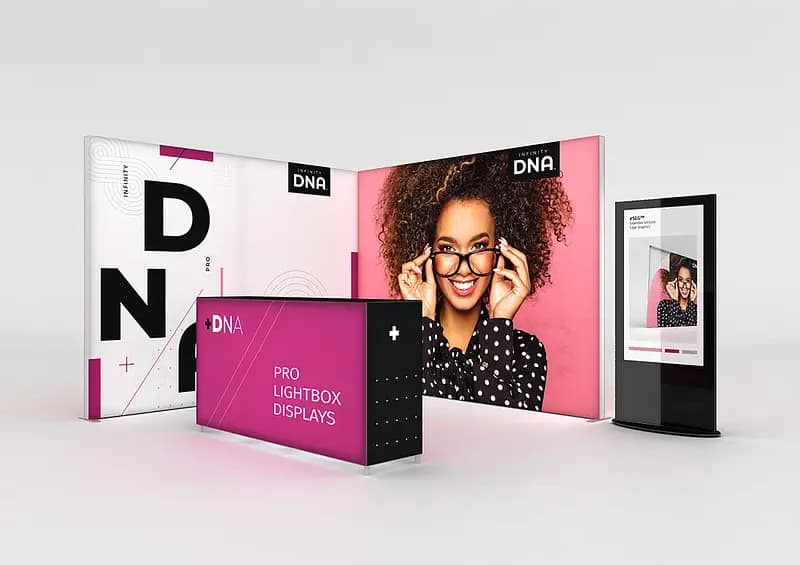
5 Material Secrets Behind Infinity DNA™ Pro Banners That Maximise Campaign Impact
Infinity DNA Pro Banners are engineered to give Australian marketers a sharper edge, combining smart materials with precision finishing to create high-quality promotional displays that actually last. Understanding what these banners are made of helps you choose the right substrate for your campaign, your site conditions and your budget. From busy shopping centres to windy construction hoardings, each material solves a different real-world problem. This guide breaks down the five key components, so you can brief suppliers confidently and avoid costly reprints. If you’re planning custom fabric banners or large-scale rollouts, material selection is where performance really starts.
1. Heavy-Duty Vinyl for Hard-Working Outdoor Sites
Heavy-duty PVC vinyl is the backbone of many Infinity DNA Pro Banners, particularly where durable outdoor signage is essential. This stock handles Australia’s harsh UV, sudden rain and heat fluctuations far better than cheaper plastics. The smooth surface supports rich colour saturation, keeping logos sharp and text legible from distance. UV-stable inks help slow fading, so promotions stay on-brand across long campaigns or seasonal installs. Vinyl’s strength also makes it suitable for fence lines, building wraps and street-facing activations. When weight and robustness outrank portability, it is often the most cost-effective choice.
2. Premium Polyester Fabric for a Sleek, Retail-Ready Finish
For brands chasing a refined, upmarket aesthetic, premium polyester fabric turns Infinity DNA Pro Banners into soft signage centrepieces. The woven texture delivers a matte, low-glare finish that photographs well under store lighting and event rigs. Dye-sublimation processes infuse colour directly into the fibres, producing smooth gradients and skin tones that flatter product imagery. Because the material is lighter than vinyl, it suits modular fabric display systems, hanging backdrops and ceiling drops where weight restrictions apply. Paired with aluminium modular stands, fabric banners pack down small, transport easily and set up quickly for touring roadshows.

3. Breathable Mesh for Wind-Exposed Installations
When your banner has to perform on scaffold, stadium railings or temporary fencing, mesh substrates come into their own. Mesh PVC or polyester contains thousands of micro-perforations that let air pass through, dramatically reducing the sail effect. This helps minimise strain on fixings and supporting structures, cutting the risk of tearing or dangerous failures in strong gusts. While print density is slightly lower than solid vinyl, bold artwork and short messaging still read clearly from distance. For councils, builders and event organisers seeking safer, compliant solutions, mesh is increasingly the default choice.
4. Reinforced Finishing That Extends Banner Lifespan
The unseen finishing work on Infinity DNA Pro Banners often determines whether a campaign survives multiple installs. Reinforced hems, welded seams and rust-resistant eyelets stop stress points from fraying or ripping under load. Options such as pole pockets, keder edging or hook-and-loop fastening are matched to tool-free banner frames and existing mounting systems. This compatibility speeds up onsite changeovers, reducing labour costs for portable marketing displays and recurring events. For reusable branding backdrops, investing in higher-spec finishing at the outset usually pays off after only a few deployments.
5. Greener, Recyclable Options for ESG-Focused Brands
With sustainability now a board-level priority, many Australian marketers are turning to PVC-free and recyclable substrates. Today’s Infinity DNA Pro Banners can be produced using polyester-based fabrics, water-based inks and reclaim schemes that divert waste from landfill. These choices support corporate reporting, while still delivering premium trade show signage and lightweight exhibition graphics for national campaigns. When assessing quotes, ask suppliers how their materials align with your ESG roadmap and whether they participate in recognised product stewardship programs such as those outlined by the Australian Packaging Covenant Organisation at https://apco.org.au. Clear documentation can strengthen both compliance and brand storytelling.
- Confirm where your banners will be installed, including wind exposure, access constraints and fixing points.
- Decide whether colour-critical photography or simple bold graphics will dominate your creative.
- Clarify how often artwork needs to change, and whether interchangeable tension graphics will reduce long-term costs.
- Assess storage, transport and set-up capabilities across your teams and event partners.
- Review sustainability priorities and how new assets will support your broader brand and ESG commitments.
If you’re weighing up materials for Infinity DNA Pro Banners across multiple locations, expert guidance can prevent expensive missteps and reprints. A specialist print partner can map your brief against substrates, finishing styles and hardware such as aluminium modular stands, then recommend the optimal combination for performance and budget. To see how different materials behave in real-world conditions and to plan your next campaign confidently, explore Just Banners’ custom fabric banners range and request a tailored quote today.


