
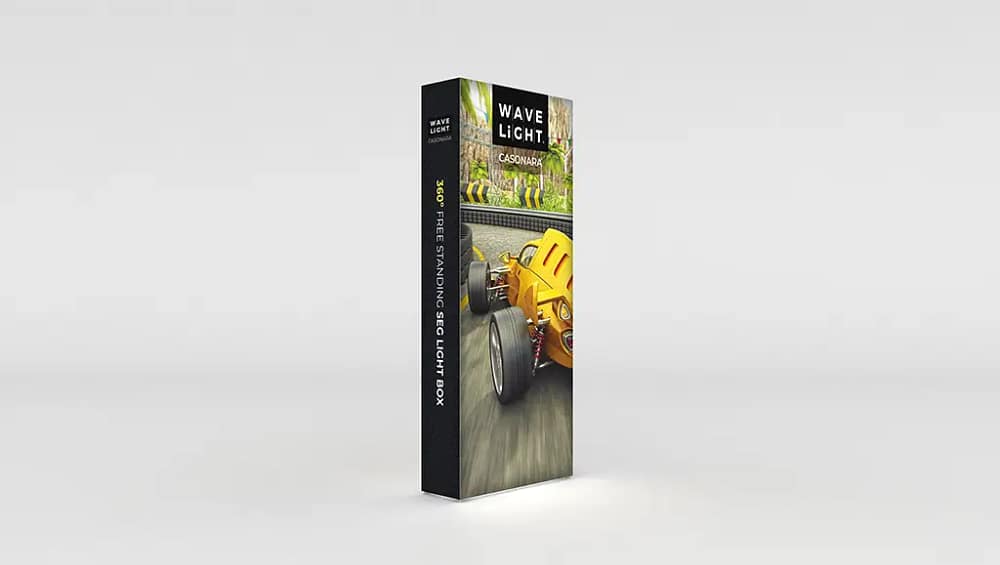
Assembling WaveLight® Casonara Banners: A Step-by-Step Guide
Assembling WaveLight® Casonara banners correctly is essential for creating a professional presence at trade shows, retail environments, and corporate events. These systems are designed as premium fabric light box displays that combine lightweight aluminum frames, internal LED light curtains, and silicone edge graphics to deliver bright, even illumination. When properly assembled, they provide a clean, wrinkle-free surface that highlights branding, messaging, and visual storytelling with maximum impact. Careful set-up also protects the SEG fabric from overstretching, snagging, or soiling, which can shorten the lifespan of your investment. By understanding how each part fits together, you can work efficiently while reducing the risk of errors that lead to rework on a busy show floor. This guide walks through each stage of the process, from unpacking to final lighting checks, emphasizing both safety and best practices. Whether you are new to backlit custom fabric banners or simply need a refresher before your next event, the following steps will help streamline your workflow. With a systematic approach, your WaveLight® Casonara banner can become a reliable centerpiece within your broader event signage options.
WaveLight® Casonara systems are engineered to be versatile and travel-ready, making them ideal for teams that rely on portable banner solutions across multiple venues. Each kit typically includes a collapsible or modular aluminum frame, labeled tubes, internal LED curtains or panels, power supplies, and front and back silicone edge graphics. Many models are designed as lightweight trade show banner kits, so they can be transported by one or two people and assembled without specialized tools. The frame sections often snap together using push-button connections, and any required Allen keys or small tools are usually included in the case. Understanding these components before your first set-up session allows you to plan staffing, timing, and layout in advance. Many exhibitors schedule a practice build at their office to check all parts, confirm graphic orientation, and become comfortable with the sequence. This trial run is particularly important when your display will be integrated with other custom fabric displays or accessories that must align precisely. By investing a small amount of preparation time, you dramatically reduce stress and downtime when you arrive at the venue.
Before beginning physical assembly, selecting an appropriate workspace is a critical step for both safety and product care. Ideally, you should work in a clean, open area large enough to lay all frame sections and SEG graphics completely flat without overlapping. Placing a clean cloth, carpet, or foam pad on the floor helps protect your fabric from dirt, concrete dust, or sharp debris that could mark or puncture the surface. Since these are portable illuminated display systems, teams often set up in loading docks or back-of-house corridors where dust and foot traffic are common, so added protection is especially important. As you unpack the case, separate frame tubes, corner connectors, LED curtains, and power components into clearly defined groups. Checking each piece against the packing list ensures nothing is missing or damaged, which is crucial if you are working on a tight schedule. This is also the right moment to verify that you have the correct SEG graphics for the specific frame size and configuration. Simple habits like this help maintain the look of reusable backlit banner solutions over many show cycles.
A thoughtful approach to safety is just as important as aesthetics when assembling WaveLight® Casonara banners in busy environments. Always keep the power disconnected while routing or adjusting LED light curtains to avoid electrical hazards and to prevent accidental short circuits. Before you plug anything in, visually inspect cords, transformers, and connectors for fraying, cracks, or bent pins. If your display will be tall or free-standing, confirm that stabilizing feet or base plates are securely attached before raising the frame upright. In crowded halls, it is wise to reserve a modest working perimeter using your shipping case, tape, or stanchions so that parts are not kicked or stepped on. Avoid placing the structure where it might impede emergency exits or interfere with overhead sprinklers and building systems. When multiple staff members are helping, communicate clearly about who is holding which frame sections, especially as you connect tall vertical uprights. A safe, orderly installation process not only protects your team but also helps preserve the integrity of your banner system and lighting components.
The first active step in assembly is unpacking and accurately identifying all frame sections so they are oriented correctly. Lay the tubes on the floor and look for any numbers, letters, or stickers that identify top, bottom, and side components; many manufacturers use a color-coded SEG frame system to make this process intuitive. Group similar parts together so you can quickly reference the instructions while keeping visual clutter to a minimum. Take a moment to locate the front and back silicone edge graphics and note any orientation markers such as arrows or sewn-in tags that indicate the top. This is especially important if your artwork differs from front to back or includes directional elements like text, logos, or photographic scenes. Confirming which graphic belongs on each side before you start will prevent frustrating reinstallation later. For large frames, consider placing the rolled graphics near their corresponding frame edges so they are ready when you reach the appropriate step. Early organization sets the tone for a smooth build and shortens the time needed to achieve a flawless finished look.
Once all parts are identified, you can assemble the base and vertical frame elements that provide the structural foundation. Begin by laying out the bottom tubes on the floor to match the footprint specified in your instruction sheet, ensuring all push-buttons or connectors fully engage. On models with detachable feet or metal stabilizing plates, attach these now so that the banner will have adequate lateral support once it is upright. Secure corner fittings tightly but avoid over-tightening any screws that could strip threads or damage the aluminum. After the base is complete, connect the vertical uprights at each corner or along the sides, confirming that they are fully seated and perpendicular to the floor. Using a quick visual alignment or a smartphone level can help you confirm that the frame is not leaning, which can cause tension issues when inserting the SEG. This is an excellent stage to double-check that all joints feel solid and that no tubes wobble inside connectors. A stable, square foundation is essential for the subsequent steps and for safe, long-term use on the show floor.
With the base and verticals locked in place, you can move on to completing the top frame and any internal support bars required. Attach the top tubes from one corner to the other, making sure push-buttons click audibly or slide-locks close properly so each joint is secure. As you progress, gently press on each corner and side to test whether the frame racks or twists, which would indicate a misaligned connector. Larger WaveLight® Casonara frames may include mid-span crossbars that prevent bowing and help maintain consistent tension across the fabric surface. Install these support bars as directed, ensuring they are centered and firmly connected, particularly if you are building a wide or tall configuration. At this stage, also confirm that the channels or grooves designed to receive the silicone edge graphics are correctly oriented toward the front and back. For systems that form part of modular SEG event signage, maintaining straight, square lines is essential so adjacent structures align cleanly. Taking a few minutes now to refine alignment can save you significant time when you begin inserting the graphics.
After the frame is fully assembled and stable, the next priority is installing the LED light curtains or internal light arrays. Lay the light curtain flat inside the frame and locate the designated mounting points along the top rail, which may feature pre-installed hooks, clips, or screws. Attach the top of the curtain first so it hangs straight down, then gently extend it toward the bottom, securing it at the lower attachment points without stretching the wires. Make sure each vertical strand is spaced evenly and not twisted, crossed, or bunched together, because this can create uneven hotspots once the LEDs are illuminated. Carefully route any connecting cables along the sides of the frame, using supplied clips or channels to keep wiring tidy and hidden behind the graphics. Only after everything is secured should you briefly power on the lights to confirm that all LEDs function and that no strands flicker. If a section fails to light, check connectors and polarity labels before proceeding further. Once testing is complete, disconnect power again so you can safely move on to installing the SEG panels.
With the lighting system in place, you are ready to attach the front and back silicone edge graphics, which is key to achieving a polished appearance. Begin with the front graphic by laying it face down on a clean, protected surface and identifying the top edge using any printed arrows or tags. Position the graphic near the frame, then start inserting the silicone strip at the top center of the frame channel, working evenly toward both top corners. Next, secure the bottom center, followed by the midpoints of the left and right sides, effectively creating a cross pattern that balances fabric tension. After these anchor points are set, continue pressing the silicone into the groove from the centers out to each corner, taking care not to overstretch the edges. For double-sided configurations, repeat this process with the rear graphic, moving slowly to avoid snagging the fabric on LED wires or mounting hardware. If you notice slight ripples or wrinkles, gently lift a small section of SEG, reposition it, and reinsert the silicone with a touch more or less tension. Properly installed, your Casonara system will function as one of your most impactful backlit custom fabric banners.
The final stage involves powering up the system and performing detailed visual and structural checks to confirm that everything is show-ready. Connect the LED transformer to the wall outlet or approved power source, making sure the main power cord is routed away from walkways or covered with cable ramps where crossing is unavoidable. Once powered on, step back and assess the display from several angles, checking for even brightness, consistent color, and the absence of dark bands or overly bright hotspots. Inspect all edges to ensure there are no visible gaps or light leaks between the SEG and the frame channel. Confirm that logos, headlines, and key visuals are level and positioned at the correct viewing height for your intended audience. Gently push on different sections of the frame to verify that there is no instability or wobble that might worsen as traffic flows around the booth. If the WaveLight® Casonara unit will be paired with counters, literature racks, or tool-free portable exhibition frames, take a moment to align them for a cohesive visual presentation. When everything is straight, evenly lit, and secure, your display is ready to welcome visitors.
After your event concludes, following disciplined disassembly and storage practices will help you maximize the life of your WaveLight® Casonara system. Always power down and unplug the unit before touching any electrical components or removing graphics. To take off the SEG, begin at a corner and carefully peel the silicone edging out of the channel, avoiding any sharp jerks or tugs on the fabric itself. Fold or roll the graphics loosely with the printed side facing inward, then store them in a clean, dry compartment of the case to prevent creasing or abrasion. Coil power cords gently without tight bends, and place transformers and connectors in padded sections so they do not rub against metal tubes in transit. Break down the frame by reversing your assembly steps, grouping components in the case in the same order every time to simplify future set-ups. Over time, this consistent approach will make your Casonara one of the most dependable portable banner solutions in your marketing toolkit. With proper care, these systems serve as durable, reusable backlit banner solutions that continue to deliver impressive visual impact across numerous campaigns and venues.


