Event organisers across Australia are reassessing how they use signage, and banner placement is emerging as a decisive factor in event outcomes. With tight budgets and rising expectations from sponsors, every banner must work harder to attract attention, guide movement and support commercial goals. Event placement strategies for effective banner displays now sit alongside programming and logistics as core planning priorities, particularly at festivals, trade expos and community events where visual noise is high.
Event Placement Strategies for Effective Banner Displays
Strategic banner placement begins with a clear understanding of why people are on-site and how they move through the space. In busy Australian venues, attendees often arrive with a loose plan, then make decisions on the fly as they encounter information and visual cues. Well-positioned banners help them make sense of the environment, while also nudging them towards key stands, brand activations and revenue-driving zones. Poorly placed banners, by contrast, are quickly tuned out or physically blocked by crowds and infrastructure.
Mapping attendee movement and high-value zones
Before investing in hardware or artwork, mapping the attendee journey is critical to shaping event placement strategies for effective banner displays. Entry gates, ticketing and registration desks are high-impact locations where visitors are receptive to basic wayfinding and brand introductions. As they move deeper into the site, attention shifts to food and beverage outlets, amenities and hero attractions, creating natural hotspots for directional and promotional messaging. Observing or modelling where bottlenecks and decision points occur will highlight priority locations for your most important banners.
- Position banners at main entry points to establish brand presence from the moment attendees arrive.
- Use signage at intersections and thoroughfares to direct traffic towards headline exhibitors or stages.
- Place detailed information near queues and seating where dwell time is higher.
- Reserve elevated or hanging positions for simple branding visible across long distances.
- Avoid placing key banners behind trees, fencing or temporary infrastructure that may shift.
In well-designed events, banners do more than decorate a space; they function as silent staff, helping visitors know where to go, what to do and which brands to remember.
Matching banner type, sightlines and environment
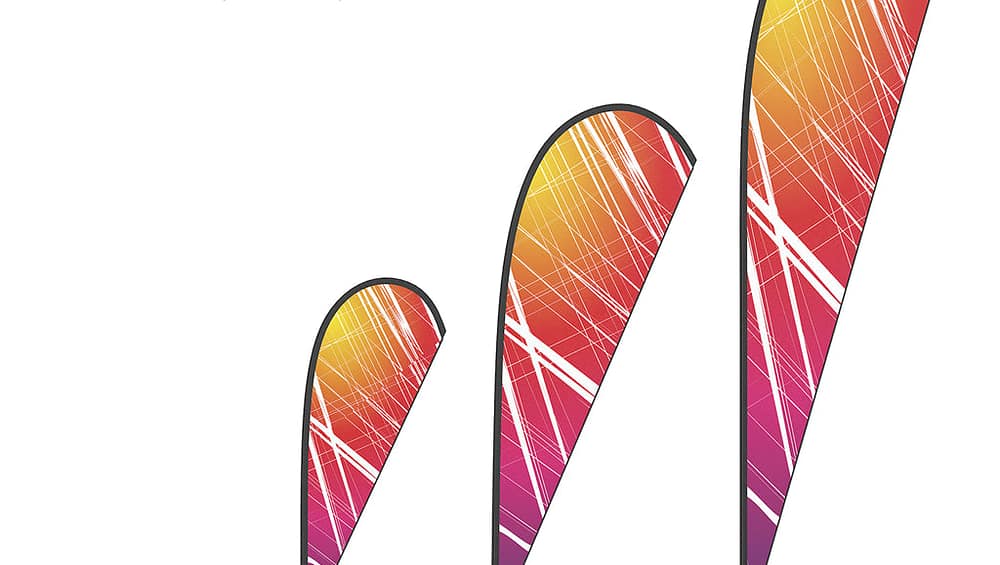
Once key locations are identified, the next step is aligning banner formats to each zone. Outdoor forecourts, stadium approaches and festival fencing call for durable solutions such as mesh banners, branded feather flag stands and weather-resistant promotional flag kits that can withstand wind and harsh sun. Indoors, exhibitors tend to rely on a mix of wall graphics and flexible hardware like Flags, Pull-Up & Poster Stands to maximise impact within strict venue guidelines and compact footprints.
Working with natural sightlines is central to event placement strategies for effective banner displays. Key messages are most likely to be read when positioned roughly between 1.2 and 1.8 metres from the ground, especially on Pull-Up Banners and indoor freestanding poster stands. Taller structures and overhead pieces should focus on simple branding, zones or arrows that can be recognised from across a hall. Overloading elevated banners with fine detail is a common mistake that wastes valuable rigging budget without improving audience comprehension.
Designing for rapid comprehension in real conditions
In crowded aisles and festival walkways, audiences often give banners only a few seconds of attention. That reality should shape copy length, colour contrast and hierarchy. Many organisers now design modular portable poster systems and Portable Poster Displays with a bold headline, one key benefit, and a single call to action such as “Visit us at Stand 42” or “Scan for exclusive offer”. For longer dwell areas, like seminar queues or lounge zones, additional schedule details can be incorporated without overwhelming the layout.
Australian conditions also demand pragmatic choices around materials and positioning. Glare from low afternoon sun can make directional signage pull up banners illegible if they face directly west, while reflective finishes may bounce indoor spotlights into attendees’ eyes. Using matte substrates, testing sightlines during bump-in, and specifying outdoor-rated pull up signage or event-ready pull up displays can prevent last-minute issues. For coastal or regional sites, lightweight travel banner kits and weather-conscious fixings reduce damage risk and keep branding intact across multi-day programs.
Turning banner placement into measurable ROI
For sponsors and exhibitors, the core question is whether event placement strategies for effective banner displays translate into measurable outcomes. Simple tracking tools now make this easier. Unique QR codes, short vanity URLs and offer-specific codes can be assigned to different banner locations, revealing which entrances, corridors or activations generate the most scans or redemptions. Over time, this data helps refine placement plans, proving value to stakeholders and justifying investment in higher-spec Promotional Flag Stands or modular layouts.
Qualitative feedback still matters. Floor staff can quickly identify confusing junctions, underused corridors or signage clusters that attendees ignore, feeding insights into the next event cycle. When paired with structured signage plans that integrate directional, promotional and branding roles, these observations support continuous improvement. For organisers juggling multiple venues and formats each year, partnering with specialists who understand both creative and logistical demands can streamline planning, production and installation across complex sites.
Professional signage partners bring experience in council approvals, rigging requirements and sustainable material options, reducing risk while lifting overall polish. They can audit floor plans, recommend a mix of indoor and outdoor assets, and suggest where modular solutions like indoor freestanding poster stands or lightweight travel banner kits will deliver the best flexibility. For teams looking to sharpen their approach, working with experts on event placement strategies for effective banner displays can turn static signage into a consistent driver of foot traffic, engagement and commercial return.
If you are planning a festival, expo or roadshow and want your signage to pull its weight, now is the time to review your current approach. Map your attendee journey, identify the true decision points, and align each space with the right mix of banners and formats. Then engage an event signage specialist who can translate that plan into durable, compliant and on-brand solutions, from concept through to bump-out. To explore how tailored banner strategies can support your next Australian event, speak with a signage expert today and request a customised placement plan and quote.