The Latest Trends in Fabric Banner Design for 2026 are reshaping how Australian brands show up at trade shows, retail activations and corporate events. With marketing budgets under pressure and sustainability now a board-level priority, every square metre of display space is expected to work harder. Across the country, marketers are turning to fabric-based signage to cut freight costs, reduce waste and create more immersive brand environments that still pack down into a boot or overhead locker.
The latest fabric banner trends reshaping events in 2026
In 2026, fabric-based display systems are moving from “nice backdrop” to core campaign infrastructure. Australian soft-signage suppliers report strong growth in tension systems, LED lightboxes and modular kits that can be quickly reconfigured between field days, expos and shopping centre pop-ups. At the same time, marketers are demanding better lifecycle performance, from lower-emission inks to clear end-of-life options for printed skins. For teams juggling national event calendars, the ability to update messaging while reusing frames is now a critical commercial advantage.
Sustainability-first thinking and smarter material choices
Environmental performance is now a deciding factor in signage procurement, particularly for brands reporting on ESG metrics or responding to retailer sustainability policies. PVC-free polyester, including options made from recycled PET, is rapidly replacing traditional vinyl, supported by water-based inks with lower VOC levels. Australian marketers are prioritising fabrics that are recyclable, phthalate-free and compatible with supplier take-back schemes, helping reduce landfill after major campaigns. This focus on cleaner inputs also supports safer indoor environments, a growing concern for conference venues and shopping centres.
- PVC-free polyester fabrics that are lighter, recyclable and easier to freight nationwide.
- Dye-sublimation printing that delivers rich colour and withstands repeated folding and transport.
- Modular hardware that can be reskinned, reducing both event costs and waste to landfill.
- Backlit and edge-lit systems that improve visibility in crowded, low-light venues.
- Venue-specific fabrics, from wind-resistant mesh for outdoor events to blockout for bright foyers.
In 2026, the most effective fabric displays combine sustainable materials, modular hardware and clear messaging to turn passing foot traffic into qualified leads.
High-impact visuals and modular systems that work harder
Visually, the strongest 2026 campaigns favour seamless fabric banner graphics with minimal visible hardware, creating clean photographic surfaces that look sharp in person and on social media. Dye-sublimation remains the dominant process, infusing colour into the fibres so prints resist cracking when folded into travel-friendly fabric banner stands. At large expos, illuminated tension fabric frames and slim lightboxes are helping smaller stands punch above their weight, especially when paired with oversized fabric hanging signs that attract attention across a busy hall.
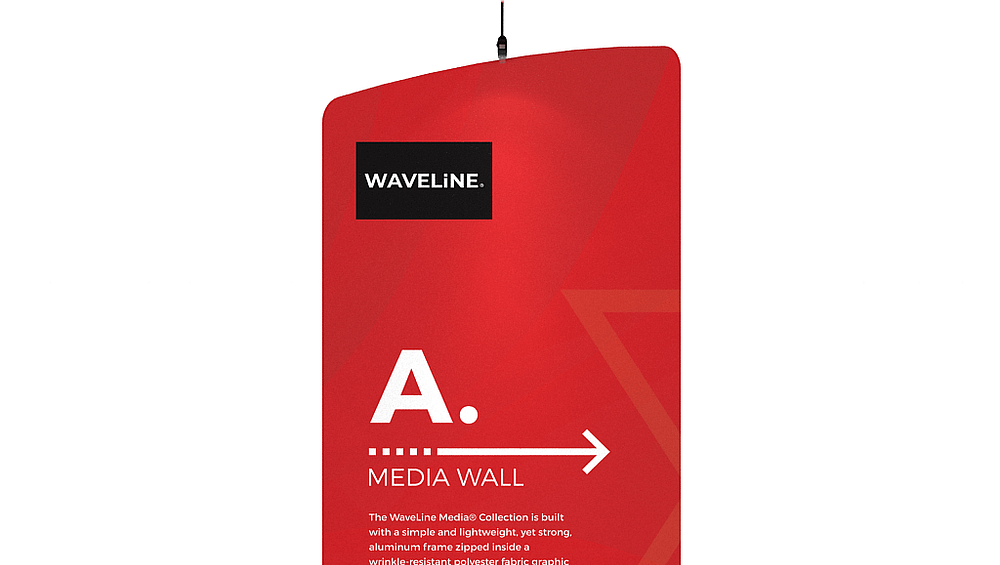
Modularity is another defining shift. Instead of ordering new structures every season, marketing teams are investing in aluminium Tension Fabric Displays that can be reskinned quickly for new creative. A single kit can function as curved tension fabric backdrops at a conference, then be rebuilt into double-sided fabric display walls for a shopping centre activation. For touring roadshows, reusable fabric trade show kits and modular portable fabric booths are proving particularly cost-effective, with lighter freight bills and faster bump-in times.
Smarter layouts, localised content and strategic fabric selection
While hardware and print technology are evolving quickly, 2026 success still hinges on clear, disciplined content. Effective Fabric Banners use a tight visual hierarchy, with the brand mark and key promise positioned for visibility above head height, supported by a single strong visual and a direct call to action. QR codes are now standard, sending visitors to event-only offers, lead capture forms or demo bookings, particularly useful where staff are fielding multiple enquiries at once. For Australian audiences, imagery grounded in local landscapes, industries and communities continues to outperform generic global stock.
Behind the scenes, fabric choice is becoming more strategic. Lightweight polyester around 120 gsm suits ceiling features and large suspended pieces, while mid-weight matte stock near 230–250 gsm is favoured for Fabric Exhibition Banners and media walls where glare-free photography matters. In bright or glass-heavy venues, blockout fabrics above 300 gsm help maintain colour accuracy, especially for double-sided graphics. For outdoor activations and coastal events, mesh reduces wind load and improves safety without sacrificing brand visibility, an increasingly important consideration for organisers and insurers.
Common pitfalls remain, from cramming too much copy onto panels to under-specifying hardware for local wind or crowd conditions. Colour inconsistencies between print runs can also dilute brand recognition when different suppliers are used ad hoc. Working with a specialist in Portable Fabric Displays who can advise on fabrics, frames, colour management and compliance gives marketers a clearer line of sight from brief to bump-out, and turns what was once “event collateral” into a measurable, reusable asset.
If your team is reassessing its display toolkit for 2026 and beyond, now is the time to align design, sustainability and lead generation goals. A focused conversation with an Australian fabric signage specialist can help you audit existing inventory, identify where modular upgrades will save money and waste, and map out a consistent visual framework for upcoming campaigns. Enquire today to book a consultation, request a tailored quote and build a flexible display kit that keeps your brand front and centre at every event.