
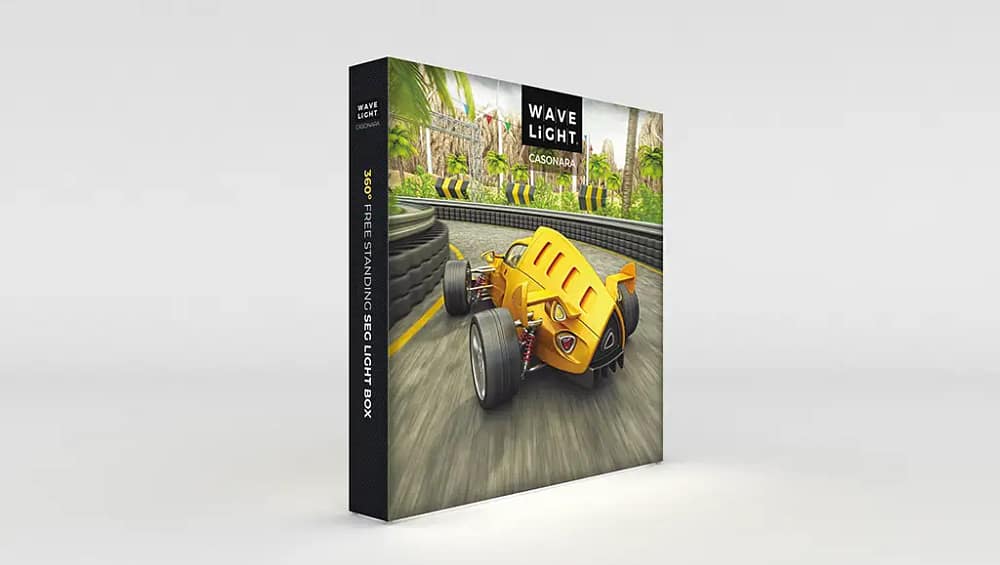
WaveLight® Casonara Lightboxes: A Beginner’s Guide to Illuminated Displays
Illuminated display solutions have moved from novelty to necessity as Australian trade shows, retail environments and pop-up activations become more competitive. Within the first few seconds of approach, a well-executed lightbox can determine whether a visitor stops, scans or walks past. For marketing leaders under pressure to justify investment, illuminated systems provide a measurable lift in visibility and dwell time compared with flat prints, especially when integrated into a broader content and engagement strategy rather than treated as simple signage.
Thoughtful use of light is no longer about being the brightest stand in the hall; it is about guiding attention with intent.
How SEG fabric lightbox systems elevate brand storytelling
Modern SEG fabric lightbox systems combine silicone-edge graphics with internal LED arrays to create a uniformly backlit surface that looks clean on camera and in person. For Australian brands planning multi-city campaigns, this technology supports rapid graphic swaps with minimal wear on the frame, enabling agile messaging updates. When paired with energy-efficient LED display panels in the 5000K–6500K range, skin tones and brand colours remain consistent across venues, which matters as more audiences capture and share experiences on social platforms.
Strategic choices for first-time lightbox buyers
Beginners often make two mistakes: over-lighting every surface or investing in hardware that does not align with their event programme. A better approach is to define one illuminated hero surface, then build a hierarchy of supporting elements using portable advertising displays, counters or towers only where they influence behaviour. For exhibitors on the road, portable illuminated booth walls and modular backlit trade show stands can be reconfigured to suit different footprints, from compact shell schemes to open island spaces across Australia.

Designing premium illuminated lightbox displays that work hard
From a design standpoint, light amplifies both strengths and flaws, so artwork discipline is critical. Premium illuminated lightbox displays perform best with simplified messaging, clear focal points and generous negative space that keeps the eye moving. Very dark backgrounds risk revealing minor banding, whereas mid-tone or lighter fields allow LEDs to diffuse smoothly. When brands treat light as part of their system—aligning colour temperature, contrast and type scales with digital guidelines—the result feels cohesive rather than like disconnected custom lightbox designs.
Operationally, tool-free exhibition lightbox frames and reusable SEG branding backdrops are reshaping how Australian teams plan their calendars. Systems such as the WaveLight® Casonara Lightbox allow smaller crews to bump in quickly, reduce contractor dependence and run more regional activity from a single kit of parts. This modular approach supports customisable backlit retail displays for in-store campaigns, while also scaling to corporate events using the same structural language. Over time, that consistency builds recognition and reduces creative and fabrication waste between campaigns.
For marketing and events leaders, the real opportunity lies in treating illuminated systems as long-term infrastructure rather than one-off expenses. By standardising around flexible frames and SEG graphics, you can respond faster to brief changes, support sustainability goals and keep brand experiences aligned across physical and digital touchpoints. Now is the moment to audit your current exhibition and retail toolkit, identify where light could reposition key messages, and speak with a specialist team about mapping a three-year roadmap for illuminated environments that remain distinctly on-brand.


