
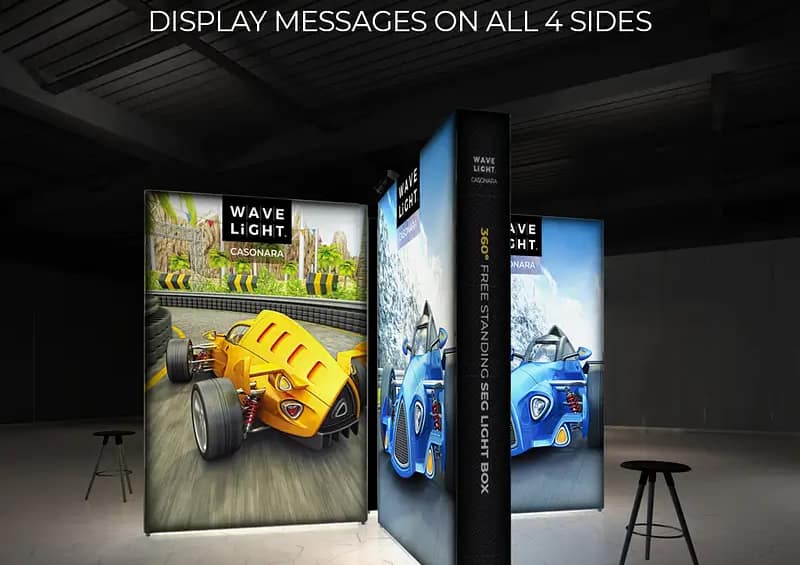
Maintenance Tips for WaveLight® Casonara Lightboxes: Keeping Your Display Fresh
Across Australian exhibition halls and shopping centres, illuminated display solutions promise high-impact visuals but can quickly lose their edge without consistent care. Dusty graphics, faint streaks and dim LED panels rarely emerge overnight; they creep in across busy event cycles. When a premium lightbox starts to look flat or patchy, visitors often interpret it as a sign that the brand is just as tired as the display. In crowded venues, that quiet decline can steadily reduce stand traffic and dilute expensive campaign activity.
The Hidden Cost of Neglecting Your Lightbox Display
Many marketers focus heavily on artwork and media spend while overlooking how maintenance affects real-world visibility. Backlit trade show displays that looked crisp at ICC Sydney in February may appear dull by the time they reach a regional roadshow in May. Small issues – a ripple in the fabric, a faint band of uneven light – chip away at perceived quality. Over a full event calendar, this can translate into fewer enquiries, weaker recall and a poorer return on hire, freight and staffing investments.
Why WaveLight® Casonara lightbox maintenance matters
The WaveLight® Casonara Lightbox is engineered for high brightness and even diffusion, but performance depends on tension, alignment and surface cleanliness. A thin film of dust can mute colours, while slightly twisted frames can create hotspots that distract from your message. Teams sometimes focus on speed over precision during bump-in, assuming “close enough” is fine under show lighting. In reality, audiences notice imperfections faster than most exhibitors expect, particularly when neighbouring stands use sharp, custom lightbox designs.

Early warning signs your display is losing impact
The first clues are usually subtle: a slightly greyed-out logo, soft edges on photography or a fabric panel that no longer sits perfectly flat. Technicians might notice longer set-up times as they wrestle with warped profiles or tangled leads from portable LED display stands. In-store, energy-efficient retail lightboxes may start to show inconsistent brightness from one end to the frame to the other. Left unchecked, these small flaws accumulate until a once-premium feature wall looks more like a dated fixture than a hero element.
- Fine dust, fingerprints or smudges visible on fabric graphics, especially under strong spotlights.
- Uneven lighting, bands or obvious bright “hot” patches breaking up key visuals and messaging.
- Slight fabric sagging at the edges of premium SEG lightbox systems after repeated re-installs.
- Intermittent flicker or delayed start-up from reusable branded lightbox frames between events.
- Frames that no longer sit square, undermining seamless modular illuminated backdrops.
Behind these symptoms sit familiar pressures: tight bump-in windows, rotating staff and gear shuttling between portable advertising displays, retail activations and freestanding modular light walls. Fabric panels are sometimes packed down while still damp, inviting odours and mould that reappear at the next show. Tool-free exhibition lightboxes encourage speed, but rushed disassembly can strain LED cabling. Without a clear maintenance routine, even the best backlit hardware is at risk of premature ageing and underperformance.
For teams relying on backlit systems across Australia, a simple care plan can prevent most failures before they surface on-site. Gentle cleaning, thorough drying, careful cable management and structured storage all extend the life of portable advertising displays and portable LED display stands. When problems persist – like recurring dim zones or stubborn creasing – it is a signal to speak with an expert about configuration, replacement components or more robust illuminated display solutions. Before your next show cycle, review how your WaveLight® Casonara Lightbox is travelling and book a quick assessment so issues are addressed long before they start costing leads and visibility.


