
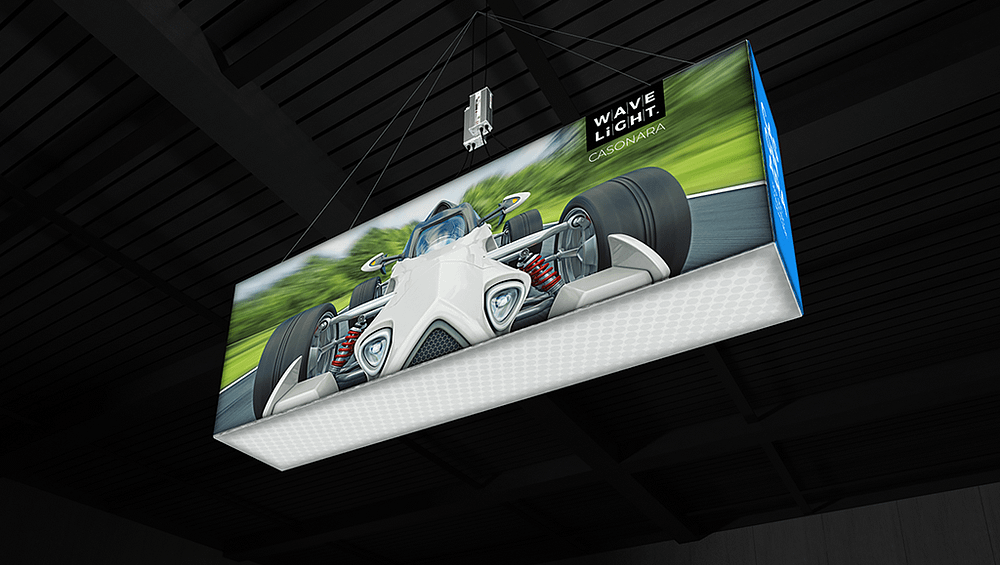
The effect of banner positioning on audience attention span is reshaping how Australian marketers think about physical brand experiences. As attention fragments across channels, the question is no longer whether banners are visible, but whether they intersect high-value moments along real customer journeys. When treated as a strategic asset rather than a decorative extra, banner placement can materially influence dwell time, mental availability, and downstream conversion.
In high-pressure environments like trade shows and busy retail centres, you are not buying space—you are buying microseconds of focused attention.
The Effect of Banner Positioning on Audience Attention Span
Eye-tracking studies show that people navigate environments using habitual scan paths, privileging natural sightlines, junctions, and decision points. The effect of banner positioning on audience attention span is most pronounced when creative appears just ahead of where choices are made, not simply where footfall is highest. In practice, this means mapping movement flows, congestion hotspots, and lingering zones, then aligning messaging to intent signals rather than landlord plan views.
Why Banner Positioning Matters Now
For Australian brands investing in trade shows, airports, and shopping centres, a premium booth or tenancy is no longer enough to guarantee impact. Cluttered concourses and visually noisy aisles can trigger banner blindness, even when production values are strong. By contrast, Hanging Banners placed above or ahead of key transitions can command attention without contributing to floor-level chaos, especially when paired with considered lighting and concise copy.
Designing Attention-Aware Banner Ecosystems
Leading marketers are moving beyond single hero signs towards layered banner ecosystems that guide attention over time and space. Overhead Trade Show Displays can flag presence from afar, while Hanging Exhibition Displays and wayfinding-focused hanging banners ensure continuity as visitors move closer. In larger venues, combining large format ceiling graphics with double-sided hanging displays or even 360-degree overhead branding can create a navigational “spine” that anchors your brand in memory.
Operationally, smart positioning also respects regulatory and engineering constraints, from venue-approved suspended signs to high-clearance fabric structures that meet safety requirements. Suspended Fabric Banners and island booth overhead signage are increasingly used as flexible frameworks that can be re-skinned across tours, reducing waste while preserving visual recognition. For complex footprints, ceiling-mounted banner systems enable zoned storytelling that links awareness messaging with product trial areas and transactional points.
From Visibility to Measurable Performance
The next step is treating banners as testable media rather than static infrastructure. Track path movement, dwell time near ceiling features, and assisted interactions with staffed areas or digital touchpoints. Comparing alternative layouts, such as different configurations of venue entry arcs and product-adjacent graphics, can reveal which positions truly extend attention span. Over time, brands that experiment with large format ceiling graphics and data-informed placement will build a defensible advantage in high-stakes events and retail campaigns.
To ensure your next installation performs, start by mapping journeys, not walls. Identify where visitors hesitate, decide, or seek orientation, then design a hierarchy of overhead and eye-level touchpoints to support those moments. If you are ready to reframe banner placement as a measurable performance lever, speak with a visual communications specialist who can help you plan, test, and optimise a cohesive system for your next campaign.


