Lighting is one of the most influential tools available to Australian exhibition teams, particularly when working with suspended installations in crowded venues. From major trade fairs in Sydney to cultural activations in Melbourne, considered lighting design determines whether a suspended feature disappears into the visual noise or becomes the central anchor for the entire experience.
The role of lighting in enhancing suspended exhibition displays
Suspended exhibition displays sit above eye level, competing with house lights, digital screens and bold architectural forms. Without a tailored lighting strategy, even premium structures and graphics can look flat, washed out or simply be missed by visitors moving quickly through a hall. Strategic lighting for suspended exhibition displays helps shape sightlines, frame key messages and guide visitors intuitively towards your stand or feature area. It also supports photography and social sharing, extending your exhibition investment well beyond the event itself.
Why lighting matters for suspended and hanging installations
Overhead installations work hardest when they are immediately legible from distance and from multiple approach routes. In practice, this means using lighting to create contrast between the suspended piece and the wider environment, while avoiding glare for visitors on the floor. Well-planned lighting can make Hanging Exhibition Displays feel lighter, more sculptural and more integrated with your brand story. For marketers under pressure to deliver measurable outcomes, illuminated overhead features can increase dwell time, prompt more conversations and improve wayfinding in complex event layouts.
- Use focused spotlights to highlight logos, taglines and key brand cues on suspended pieces.
- Combine ambient lighting around hanging structures with targeted accents to create depth and hierarchy.
- Integrate LEDs into frames for consistent lighting for fabric banner graphics across long event days.
- Plan ceiling-mounted exhibition light rigs early to align with venue infrastructure and safety rules.
- Test viewing angles to minimise reflections and ensure readability from core visitor approaches.
In busy Australian exhibition halls, carefully planned light levels and angles often do more to amplify a suspended display than increasing its size or budget.
Key lighting techniques that transform overhead displays
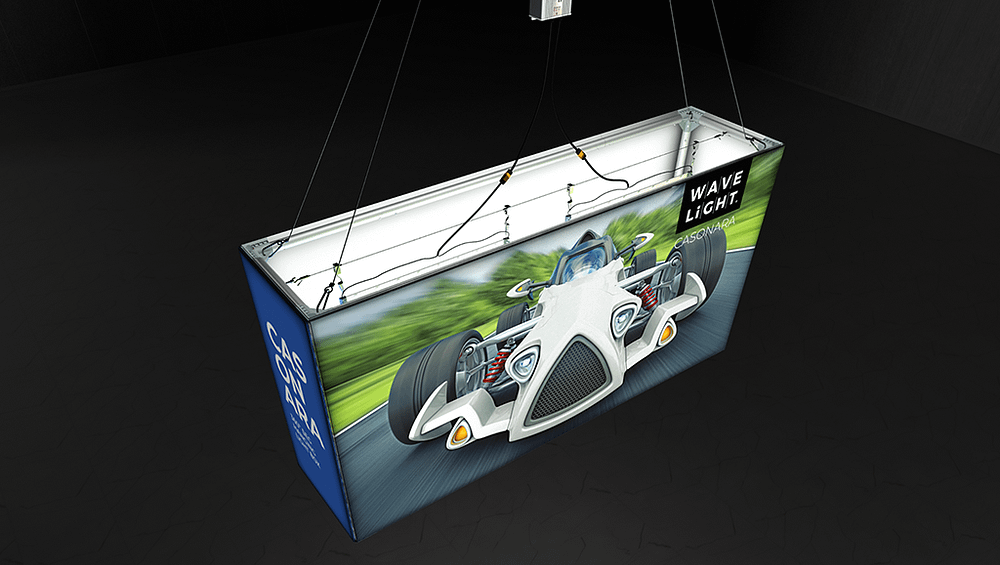
Successful suspended exhibition displays typically rely on a layered lighting strategy. Narrow-beam spotlights can isolate a logo, product silhouette or campaign line, while broader beams wash larger surfaces without spilling into neighbouring stands. Designers are increasingly using backlit suspended display systems to give fabric structures a floating, haloed effect visible from across the hall. For more complex forms, ceiling-mounted exhibition light rigs can be focused to reveal depth, texture and movement without creating harsh shadows on the floor.
LED technology now allows fine control over colour temperature, dimming and timing, making it easier to respond to changing ambient conditions throughout the day. Tunable fixtures mean a brand can shift from cool, technical whites in the morning to warmer tones for evening networking sessions. Subtle use of coloured light can reinforce campaign palettes or distinguish different zones within the same stand. When integrated early, LED halos for suspended signage and other illuminated hanging showpieces become part of the design language rather than an afterthought.
Balancing drama, legibility and visitor comfort
The temptation with overhead installations is to push for maximum drama, yet excessive contrast or misaligned beams can make text difficult to read and surfaces uncomfortable to look at. Best practice is to design a clear hierarchy: ambient lighting around hanging structures for safe circulation, targeted accents for storytelling, and softer task lighting for product displays or demos on the stand. This balance helps visitors orient themselves, read key messages quickly and move naturally towards points of engagement.
For brands relying on Suspended Fabric Banners or modular structures that travel between venues, consistency is another challenge. Different halls, ceiling heights and house rigs can radically change how a design appears. Documented lighting plots, fixture specifications and guidance on spotlighting overhead trade show features help repeat installations achieve similar impact in Brisbane, Perth or regional centres. Investing in portable, controllable fixtures also reduces reliance on variable venue stock.
Common pitfalls that reduce impact and ROI
One of the most frequent missteps is assuming that standard venue lighting will be sufficient. House rigs are generally configured for uniform brightness, not for storytelling or brand emphasis, leaving Overhead Trade Show Displays looking flat or partially obscured. Another common issue is poor alignment with visitor flow, where a feature reads well from one approach but disappears from the main aisle. Early collaboration between designers, riggers and lighting specialists can map sightlines and avoid these dead zones.
Heat and power management also matter, particularly for multi-day shows and museum programs. Older fixtures can create hot spots around staff and visitors, or overload temporary circuits. Modern LEDs reduce heat, draw less power and offer more control, making them well-suited to backlighting Hanging Banners and other lightweight systems. Careful planning of directional lights for high-level displays ensures that neighbours are not dazzled and that light spill does not dilute your visual focus.
For Australian organisations planning their next exhibition program, the right lighting strategy can turn suspended features into true navigational and branding assets. To explore how integrated lighting and display design can elevate your next installation, improve engagement and simplify delivery across multiple venues, speak with a specialist team and request a tailored consultation or quote.