
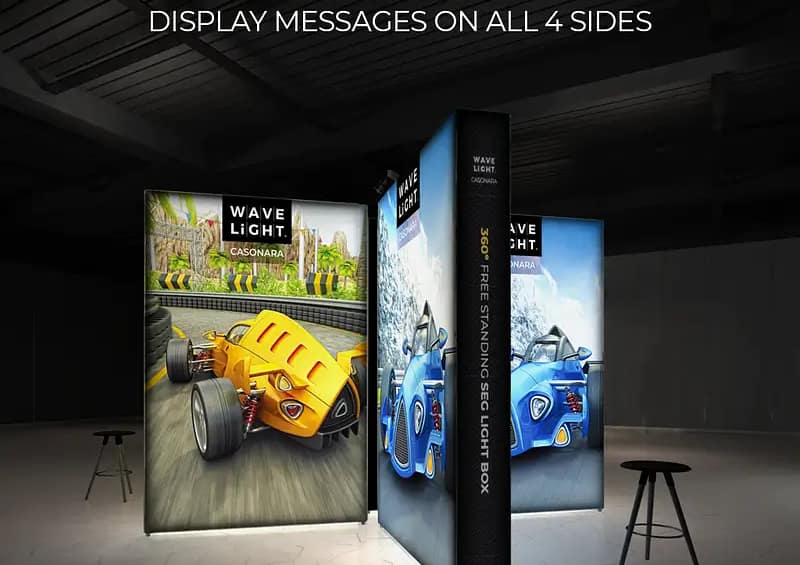
Exploring the materials behind WaveLight® Casonara banners helps Australian organisations choose reliable, high-impact illuminated retail display solutions. These premium backlit trade show displays combine lightweight frames, tension fabric graphics and LED technology to produce bright, consistent branding in busy environments. By understanding how each material performs, marketers can select event signage options that balance visual quality, durability and ease of transport for campaigns across the country.
Understanding WaveLight® Casonara Construction
WaveLight® Casonara banners are based on tool-free display frameworks made from extruded aluminium profiles. The frame sections lock together quickly, creating a rigid yet lightweight structure that is straightforward to handle on exhibition floors. Once assembled, the system becomes a modular light box signage solution that can be scaled or reconfigured to suit different stand sizes, retail walls or reception areas. This construction approach supports both one-off activations and ongoing touring schedules.
Key Materials Used in WaveLight® Casonara Banners
The core frame material is anodised aluminium, chosen for its strength-to-weight ratio and resistance to corrosion during repeated transport. Around this skeleton sit tension fabric graphics, typically produced from premium polyester designed for backlighting. Using dye-sublimation printing, ink is infused into the fibres, ensuring colours remain rich and text clear even under strong LED illumination. This method also supports reusable exhibition graphics, as the fabric can be folded, transported and reinstalled with minimal visible wear.

The Role of Tension Fabric and SEG Technology
A defining feature of these SEG fabric banner systems is the silicone edge graphic finish around each panel. A narrow silicone strip is stitched to the fabric perimeter, then pressed into channels within the frame, pulling the surface tight. This creates a smooth, frameless appearance with minimal creasing, ideal for custom fabric displays in premium environments. The SEG approach also allows quick graphic changes when campaigns update, keeping installation times and labour costs under control.
LED Backlighting and Light Diffusion Layers
Inside the frame, low-voltage LED modules provide the bright, even glow associated with portable light box backdrops. Many systems include reflective back panels or diffusion fabrics to spread the light uniformly and prevent visible hotspots. When correctly matched with fabric weight and translucency, this layering maintains consistent colour and legibility across the entire surface. For busy venues, this means messaging remains clear from multiple angles and distances, even under mixed ambient lighting.
Before investing in Waveline Casonara Banners, organisations should consider how often displays will move between sites, and whether they require single or double-sided branding panels. Aluminium frames typically pack into wheeled cases, making them suitable as portable banner solutions for touring exhibitions, conferences and shopping centre activations. Fire-retardant fabric, recyclable aluminium and low-VOC inks may also be necessary to satisfy venue regulations and internal sustainability policies across Australian operations.
When comparing illuminated display choices, weigh up how the materials will support long-term brand consistency and operational efficiency. Businesses needing flexible event signage may prioritise modular systems that adapt across campaigns, while retailers might focus on permanent illuminated retail display solutions for feature walls. To explore how these materials and technologies apply to your specific space, consider speaking with a display specialist who can guide sizes, brightness levels and configuration options for your next installation.


