
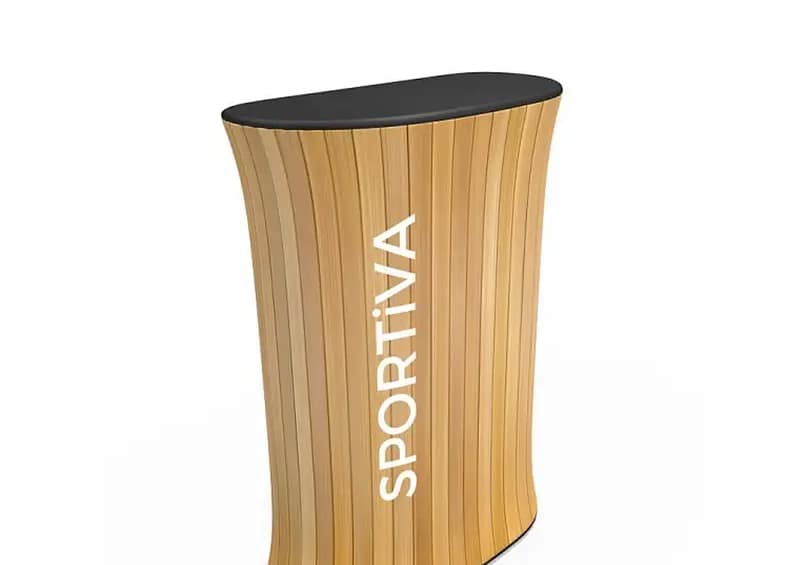
The Role of WaveLine® Counters in Modern Retail Spaces
Australian retailers are rethinking how they use service points as store formats, leasing terms and customer expectations shift. The role of WaveLine® Counters in modern retail spaces is to provide a flexible, branded counter solution that can move with these changing demands. Unlike fixed joinery, they give merchandisers, marketers and store planners a portable way to support new campaigns, click-and-collect, demos and queue management. This makes them especially relevant for chains running frequent in-centre activations, seasonal pop-ups or touring roadshows.
Why modular counters matter in contemporary retail
Modular counters have become a quiet workhorse in contemporary Australian retail, filling the gap between permanent cabinetry and temporary trestle tables. For brands juggling short-term leases, changing planograms and omnichannel services, custom display counters are no longer a luxury but a practical necessity. Retailers are looking for solutions that assemble quickly, pack down small and still look polished enough for premium centres. When combined with portable branded reception desks and slimline signage, these counters help smaller footprints feel considered rather than improvised.
How WaveLine® Counters work in retail environments
These tension fabric display counters use an aluminium tube frame wrapped in a stretch fabric graphic that zips closed for a smooth, continuous surface. The frames are engineered as lightweight retail display units, yet many models include internal shelves and cable access for EFTPOS, tablets and laptops. Staff can keep brochures, samples or devices out of sight, while the front face carries campaign artwork, loyalty messages or wayfinding. Because the graphic skin can be reprinted and swapped, retailers running frequent promotions gain a reusable trade show fixtures style solution inside the store.

Comparing portable counter solutions for retail
Retail teams typically weigh up three approaches: simple pop-up counters, more structured kiosks and modular exhibition counter systems based on fabric frames. Pop-up units are fast to deploy but can lack storage and feel flimsy under heavier point-of-sale hardware. Traditional kiosks offer stability yet are slower to move and costly to rebrand between campaigns. Fabric-based counters, including many portable exhibition solutions, aim to balance speed, strength and visual impact. They also integrate readily with trade show accessories such as tablet stands or brochure holders, supporting both in-store and event use.
- Footprint and working height suitable for your staff and customer flows.
- Cable management for POS, charging stations and digital screens.
- Durability of the countertop under constant use and cleaning.
- How often graphics need to change across campaigns and locations.
- Ease of transport, from compact shipping display stands to multi-store rollouts.
Design and branding also play a decisive role, particularly for retailers competing in busy CBD and centre environments. Fabric counters support edge-to-edge graphics, making them suitable as branded trade show counters that double as in-store demo pods. When paired with considered lighting and tool-free event furniture, they can anchor a small activation zone without looking temporary. Many brands now deploy the same counter families across events and stores, treating them as a shared fleet of fixtures. WaveLine® Counters fit this model by offering consistent hardware with campaign-specific skins.
Choosing the right approach starts with mapping customer journeys, then matching counters to specific interaction points. A permanent timber counter may still anchor a flagship, while fabric counters support sampling, mobile service or online order pickup nearby. For brands using portable exhibition solutions at events, reusing the same counters in-store improves ROI and visual consistency. Retailers should test different configurations in a pilot store, assessing set-up time, staff workflow and customer response. To compare systems, clarify specifications and plan graphics, consider speaking with a specialist display partner who can advise on load ratings, print options and deployment strategies.
For retailers planning their next fitout or activation, the priority is finding counters that can adapt as quickly as their marketing calendar. Evaluating modular fabric units alongside traditional joinery helps ensure you invest in fixtures that work across seasons, stores and events. If you’re ready to explore options, book a conversation with an experienced retail display consultant who can help you compare configurations, review case studies and select counters that support your evolving strategy.