The Best WaveLight® Casonara Lightbox Configurations for Your Needs
The WaveLight® Casonara Lightbox Range Explained
Exhibitors across Australia are turning to the WaveLight® Casonara Lightbox as a flexible way to boost stand visibility without blowing out freight or labour costs. This modular, backlit system uses tool-free display frames and SEG fabric lightbox systems to create uniform illumination across every panel. For brands comparing illuminated display solutions, the range spans slim wall units, counters, towers and hanging structures that can all pack into wheeled cases. The key is understanding how each format supports different objectives, from premium retail lightboxes in shopping centres to backlit trade show displays on the national circuit. Once you know your typical stand sizes and venues, you can start mapping which components will work hardest for you.
WaveLight® Casonara Lightbox Walls and Backdrops
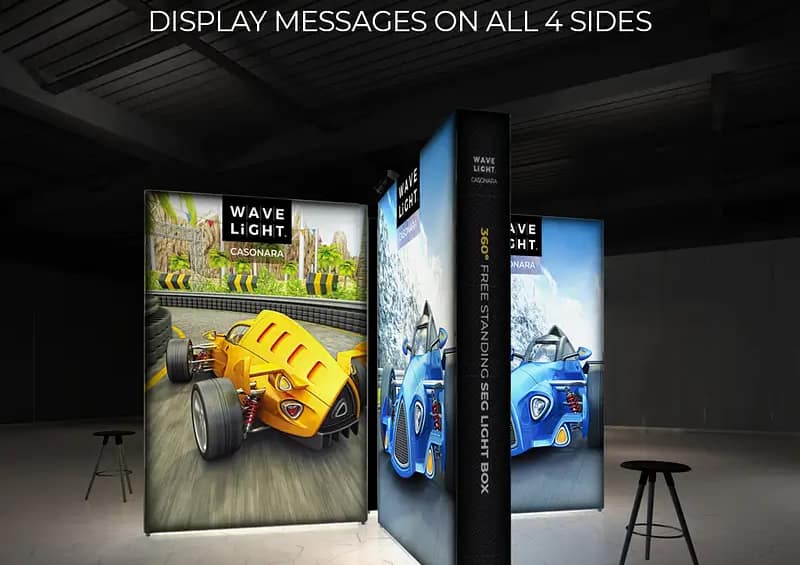
Lightbox walls usually form the backbone of modular illuminated booths, acting as both branding canvas and structural shell. Standard Australian configurations sit around 2.4 metres high to align with venue regulations, with widths that can be reworked from small portable LED booth backdrops to longer, reusable exhibition light walls. Straight runs are well suited to tight shell schemes, while L-shaped or U-shaped layouts help define open corners and island stands in busier halls. Because panels are modular, a configuration built for ICC Sydney can often be reassembled to suit regional expos with minimal extra hardware. Double-sided backlit graphics are particularly useful on corner and peninsula stands, catching traffic from multiple aisles.

Counters, Towers and Hanging Lightboxes
Beyond walls, counters, towers and overhead structures each solve specific communication problems. Illuminated counters provide a functional surface for demos, sign-ups and sampling while extending branding to the aisle edge, making them useful portable advertising displays for product-led campaigns. Towers come into play where rigging isn’t available or cost-effective, adding vertical prominence and discreetly housing cables or storage. Hanging cubes and rectangular “blimps” deliver long-range visibility but attract additional rigging fees and approval requirements, so they suit larger, recurring shows. When comparing these custom lightbox designs, calculate not only upfront costs but also storage, transport and installation over multiple seasons.
- Choose wall lightboxes as your primary branding surface for most expo footprints.
- Add counters where you need hands-on demos, sampling points or lead capture stations.
- Use towers as vertical beacons when rigging is limited or ceilings are lower.
- Reserve hanging lightboxes for major shows where long-range visibility justifies rigging costs.
- Plan your kit so it repacks into existing cases and vehicles for interstate touring.
Decision-making becomes easier when you factor in venues, team resources and long-term use. Touring exhibitors in Sydney, Melbourne and Brisbane often prioritise lightweight kits that fit CA700 cases and can be installed by small teams without contractors. For them, a reconfigurable set of walls, counters and towers built around the WaveLight® Casonara Lightbox can adapt from local chambers of commerce events to national expos. Corporate brands with strong visual identities might focus on clean lines and tool-free display frames, while retail campaigns lean into more immersive, layered layouts. Whatever your profile, working with an exhibition specialist helps balance impact, compliance and budget before you invest.
If you are weighing up different seg fabric lightbox systems or considering a shift from traditional pull-up banners, it’s worth mapping your next 12 to 24 months of events. List your most common stand sizes, travel routes, staff skills and storage constraints, then compare how walls, counters, towers and overhead elements can scale across them. This structured approach will clarify whether you need compact portable LED booth backdrops for pop-ups or a more extensive suite of reusable exhibition light walls for national tours. To explore which configuration of the WaveLight® Casonara Lightbox is right for your program, speak with a specialist supplier who can provide 3D layouts, local printing and tailored advice.