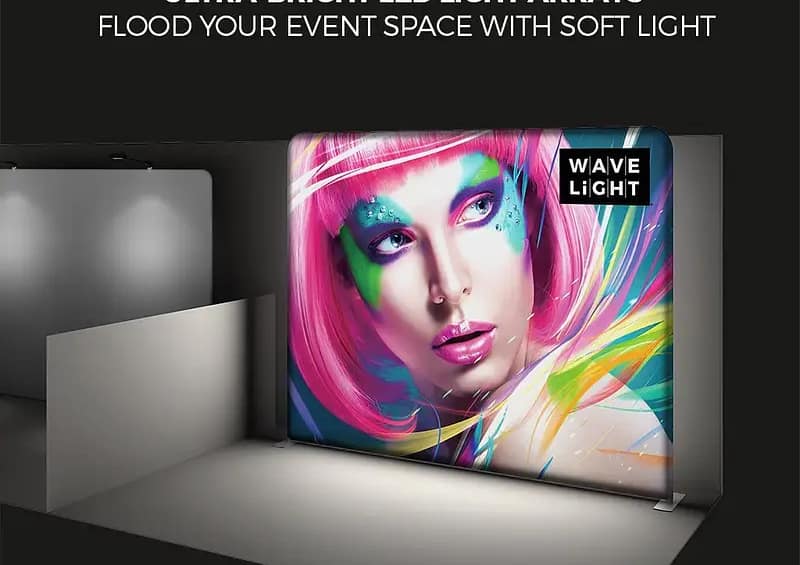
The Benefits of Fabric Graphics in WaveLight® LED Lightboxes are coming into sharp focus for Australian brands looking to modernise their illuminated display solutions. From convention centres to shopping centres, marketers are seeking visuals that pack flat, assemble fast and deliver consistent brightness under tight event schedules and budgets. Fabric-based systems are emerging as a practical answer, replacing heavy acrylic panels and dated lightbox hardware that can be costly to ship and slow to install.
The Benefits of Fabric Graphics in WaveLight® LED Lightboxes
Fabric graphics sit at the centre of this shift, pairing lightweight tension textiles with energy-efficient display lighting to create striking illuminated surfaces. Dye-sublimation printing embeds ink into polyester fibres, producing durable colour that resists scratching and fading during frequent pack-downs. When stretched across aluminium frames, the fabric diffuses LED light evenly, helping brands avoid glare and distracting hotspots that can undermine campaign photography or detailed product shots on the show floor.
Why fabric graphics are reshaping illuminated displays
For exhibitors travelling between Sydney, Melbourne and Brisbane, the logistics case is compelling. Fabric skins fold into compact bags and cases, dramatically reducing freight costs compared with rigid panels and other portable advertising signs. At the venue, teams can tension the graphics quickly, using SEG fabric display systems that press a silicone edge into channels around the frame. This tool-free process allows marketing staff, not specialist installers, to manage campaign changeovers and keep messaging current.

Comparing fabric lightboxes with traditional signage
When assessing fabric lightbox signage against PVC banners or acrylic, performance under lighting is a key differentiator. Backlit trade show displays using textiles often appear richer and more uniform, with fewer reflections from venue spotlights or passing foot traffic. While ultra-fine typography can appear marginally softer than on rigid substrates, the trade-off is greater portability and the option to create reusable exhibition lightboxes that can be re-skinned for future campaigns without replacing the core frame or LEDs.
- Evaluate whether single-sided or double-sided custom lightbox designs will better capture attention in open-plan exhibition spaces.
- Consider frame depth and LED placement to maximise illumination and support modular illuminated booth walls across different stand sizes.
- Check how easily staff can swap fabric skins to keep branded retail lightbox graphics aligned with seasonal campaigns.
- Look for systems that balance brightness with power efficiency to manage running costs of energy-efficient display lighting at longer events.
- Confirm that portable LED fabric stands and hardware can handle frequent transport between cities without excessive wear.
For many Australian marketers, a WaveLight® LED Lightbox offers a pathway to modern, flexible presentation without overhauling every element of their display program at once. By combining fabric graphics, robust aluminium frames and LEDs, these systems provide a scalable platform that can adapt to changing campaign needs. Speaking with an exhibition display specialist can help you compare configurations, from compact towers to large-format feature walls, and match them to your schedule, staffing and touring requirements.
If you are planning a national roadshow, retail refresh or corporate event series, now is an ideal moment to review your illuminated options and map out a cohesive strategy. Weigh the long-term value of systems that can be re-skinned, resized and reconfigured, rather than replaced outright after each campaign. Then book a consultation with a display expert to compare solutions side by side, clarify print and hardware choices, and choose a fabric-based lightbox set-up that will keep supporting your brand across multiple locations and seasons.