
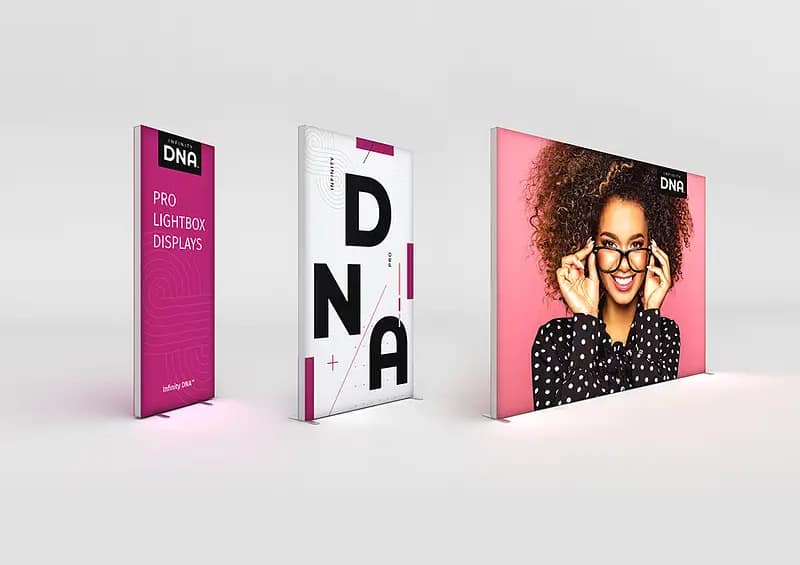
The Role of Integrated LED Lighting in Infinity DNA™ Pro Lightboxes
Integrated LED lighting has moved from being a backroom engineering decision to a front-line strategic tool in Australian retail. Within the first few seconds of a shopper entering a store, illuminated visuals influence navigation, brand perception, and purchase intent. The role of integrated LED lighting in Infinity DNA™ Pro Lightboxes is to turn that brief moment into consistent, high-impact storytelling while quietly driving down energy use and maintenance costs across national store networks.
Why Integrated LED Lighting Matters in Modern Lightbox Design
At its best, integrated LED lighting is invisible; shoppers notice the message, not the hardware. For retailers, however, the technical architecture behind a fabric lightbox system now directly affects merchandising agility and operational performance. Modern LEDs offer high-lumen output with low wattage, long lifespans, and stable colour rendering, which is critical for brand consistency across hundreds of sites. Edge-lit and backlit configurations can be tuned to graphic formats, ceiling heights, and ambient light, ensuring campaigns remain legible and vibrant without visual hotspots.
Infinity DNA™ Pro Lightbox and the Evolution of Retail Infrastructure
The Infinity DNA™ Pro Lightbox reflects a broader shift towards treating lightboxes as core infrastructure rather than disposable fixtures. Integrated LED arrays are engineered for even illumination, rapid install, and straightforward servicing, reducing downtime during campaign changes. Slimline profiles maximise visual area while minimising intrusion into walkways, a key consideration for high-traffic environments. When rolled out as a standard across a network, these systems support predictable performance, consistent branding, and simplified facilities management.
Energy Efficiency, ESG Expectations, and Lifecycle Value
Energy efficiency is no longer a nice-to-have; it sits at the heart of store design decisions. According to the International Energy Agency, LEDs can deliver up to 90% energy savings compared with traditional lighting, and Australian retailers are under pressure to demonstrate such gains in ESG reporting. Integrated LED lighting paired with smart controls—timers, sensors, and dimming based on trading hours—can significantly cut kWh consumption. Over the lifecycle of a lightbox rollout, this directly translates into lower operating costs and reduced carbon emissions.
Visual Merchandising Impact: From Static Panels to Dynamic Storytelling
From a visual merchandising perspective, integrated LEDs enable precise control of brightness and colour temperature, enhancing everything from fashion textures to FMCG packaging. SEG fabric graphics can be refreshed quickly while using the same hardware, supporting frequent campaign changes without landfill-heavy fixture swaps. By standardising around an Infinity DNA™ Pro Lightbox platform, marketing teams gain a predictable canvas for creative, while store teams benefit from plug-and-play simplicity. The result is a more agile, data-informed approach to in-store storytelling that keeps pace with digital channels.
Strategic Considerations for Australian Retail Leaders
For Australian retail leaders reviewing their environments, integrated LED lighting should be evaluated through a strategic lens: total cost of ownership, ESG contribution, and brand performance. Questions to ask include: How uniform and controllable is our current illumination? What energy and maintenance savings could a modern system unlock over five to seven years? And how easily can stores execute national campaigns at speed and at scale? By treating the Infinity DNA™ Pro Lightbox as a long-term asset rather than a line-item expense, retailers can align visual impact with measurable business outcomes. Now is the time to audit existing lightboxes, model the benefits of integrated LEDs, and engage specialists to future-proof your in-store experience.
Next step: Review your current lightbox and lighting strategy, identify underperforming locations, and speak with an expert to map a phased upgrade to integrated LED platforms that support both ESG goals and sharper in-store storytelling.


