
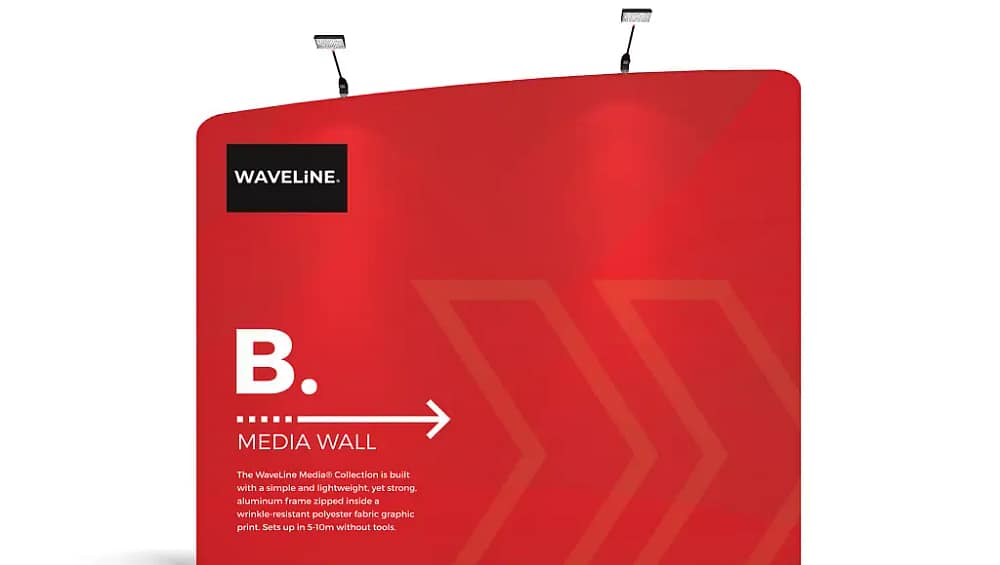
What Are WaveLight® Tension Fabric Banners Made Of?
WaveLight® Tension Fabric Banners are redefining how Australian brands think about event and retail presentation. Built around a premium polyester skin and engineered aluminium frame, they sit at the intersection of visual impact, portability, and sustainability. For marketing leaders reviewing portable display systems in a post-pandemic landscape, understanding the underlying materials is essential to making smarter, longer-term investments.
Behind every impressive fabric display is a precise balance of textile engineering, print science, and structural design working together to protect your brand.
What Are WaveLight® Tension Fabric Banners Made Of?
At the core is a warp-knit polyester fabric formulated for stretch, memory, and surface smoothness. Unlike basic cloth graphics, this textile is engineered to hold tension across curved and straight frames without rippling. When combined with dye-sublimation printing, it becomes the foundation for custom fabric displays that can survive repeated bump-ins and bump-outs across Australian venues while maintaining colour fidelity and edge-to-edge coverage.
Understanding WaveLight Tension Fabric Banners
The structural backbone is a set of anodised aluminium tube components designed as aluminium frame banner systems. This approach delivers strength without bulk, enabling airline-friendly freight and rapid build times on show floors. Push-fit connections and a tool-free display frame philosophy reduce labour costs and setup risk, a critical factor when exhibition teams are under pressure to activate complex spaces within tight windows.

Printing Technology and Visual Performance
Dye-sublimation printing is not just a production detail; it is a strategic enabler. By infusing inks into the fibres, brands gain stretch fabric signage solutions that resist scratching, cracking, and fading under harsh venue lighting. The fabric’s weave supports even diffusion, making backlit fabric banner walls visually consistent from edge to edge. For marketers, this means reduced risk of colour mismatch across campaigns and the ability to reuse graphics in different environments with confidence.
From a planning perspective, these material choices unlock genuinely modular tension fabric displays. Frames can be repurposed as portable trade show backdrops for one event, then re-skinned as lightweight fabric display stands in retail activations. This flexibility allows teams to build reusable exhibition banner kits rather than commissioning one-off assets that end up in landfill. The result is a more sustainable, financially disciplined approach to tension banner solutions that aligns with corporate ESG commitments.
As Australian events regain momentum, the question is no longer whether fabric systems are viable, but how effectively businesses integrate them into broader brand ecosystems. Marketing leaders should audit existing hardware, assess the upgrade path to modern aluminium and polyester combinations, and identify where WaveLight technology can replace legacy PVC kits. Ready to rethink your exhibition visuals? Speak with a display specialist today to review your current banner hardware, explore fabric-based options, and map out a more sustainable, flexible event signage strategy.


