
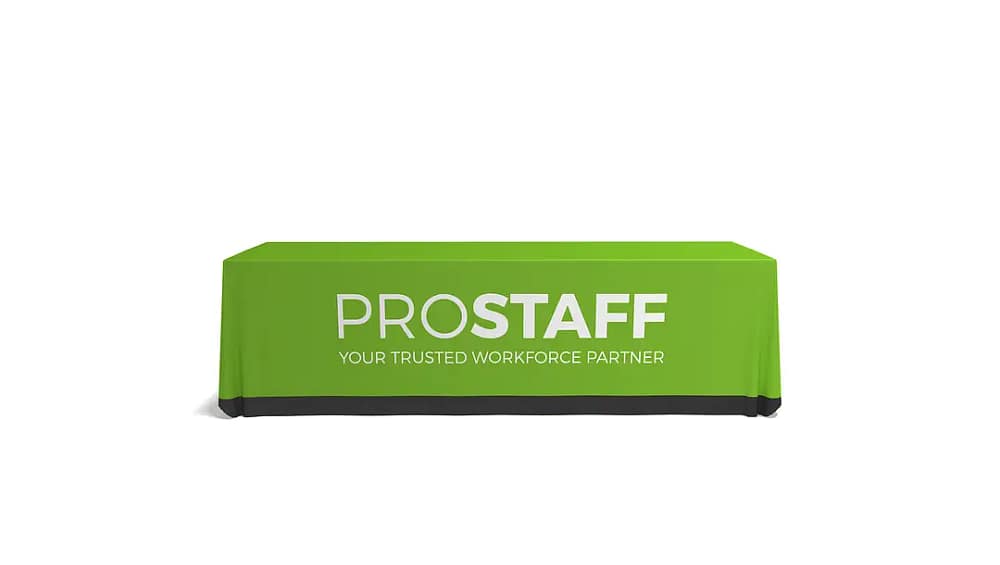
Exhibiting at trade shows and promotional events across Australia requires businesses to carefully choose the right display solutions for their booth. With many options available, exhibitors often decide between compact tabletop displays or larger exhibition display systems such as media walls or full stand structures. Each option offers its own advantages depending on the event type, booth size, and marketing objectives. Tabletop Displays & Covers have become a popular choice for many exhibitors because they provide a professional and portable display solution that works well in a variety of exhibition environments.
Understanding Tabletop Displays & Covers
Tabletop Displays & Covers are compact exhibition display systems designed to transform standard event tables into branded marketing spaces. They typically include a printed table cover that fits over the table and a tabletop display panel positioned behind the table to showcase graphics at eye level.
This setup allows exhibitors to present their brand clearly while maintaining a clean and organised booth layout. The table itself can be used to display brochures, product samples, or demonstration materials, while the display panel provides additional visual messaging for visitors walking past the booth.
Because they are compact and lightweight, tabletop displays are especially suitable for conferences, networking events, and smaller exhibition spaces.
Understanding Large Exhibition Displays
Large exhibition displays usually include display systems such as media walls, modular exhibition stands, or tall banner structures. These displays create a strong visual presence across a larger booth area and are often used at major trade shows where exhibitors have more floor space available.
Large displays typically feature wide graphic panels that act as a backdrop behind the booth. They help attract attention from across the exhibition hall and allow businesses to display detailed marketing visuals or product imagery.
While these displays offer impressive visibility, they often require more setup time, transportation planning, and storage space compared with smaller display solutions.
When Tabletop Displays Are the Best Choice
For many exhibitors, tabletop displays offer a practical and efficient display solution. They are particularly well suited for events where booth space is limited or where exhibitors are provided with a standard table rather than a full exhibition stand.
Tabletop displays are ideal for:
-
conferences and networking events
-
recruitment fairs
-
education expos
-
community exhibitions
-
promotional information counters
Because they are compact and easy to transport, businesses can quickly set up their display and begin engaging with visitors without dealing with complicated installation processes.
When Large Displays Are More Suitable
Large exhibition displays may be the better choice for businesses exhibiting at major trade shows with large booth spaces. These displays allow companies to create visually striking booth backdrops that can be seen from across the exhibition floor.
For businesses launching new products or showcasing multiple services, larger displays also provide more space for detailed graphics and messaging.
However, these displays often require larger budgets, additional transportation arrangements, and longer setup times compared with smaller display systems.
Combining Tabletop Displays with Larger Displays
In many cases, businesses choose to combine tabletop displays with larger exhibition structures to create a complete booth environment. For example, a large media wall may serve as the main backdrop for the booth while a branded table with a tabletop display acts as the primary interaction area for visitors.
This layered display approach allows exhibitors to benefit from both strong visual impact and practical visitor engagement areas within the booth.
Portability and Convenience
One of the biggest advantages of tabletop displays is their portability. Large exhibition structures may require freight services or specialised transport cases, particularly when travelling between major venues such as the International Convention Centre Sydney or Melbourne Convention and Exhibition Centre.
Tabletop displays, on the other hand, are lightweight and compact. The frames typically fold into small carry cases and the printed fabric graphics can be folded without damaging the design.
This portability makes them ideal for businesses attending multiple events throughout the year across different cities in Australia.
Cost Considerations for Exhibitors
Budget is another important factor when selecting exhibition displays. Large display systems often involve higher production costs as well as additional expenses for transportation and storage.
Tabletop displays provide a more cost effective alternative while still offering strong branding opportunities. Because they are reusable and easy to transport, businesses can use them at multiple events without significantly increasing their marketing budget.
For startups, small businesses, or organisations attending exhibitions for the first time, tabletop displays provide an accessible entry into exhibition marketing.
Conclusion
Choosing between Tabletop Displays & Covers and larger exhibition displays depends on the type of event, the available booth space, and the marketing objectives of the exhibitor. Large displays offer strong visual impact for major trade shows with spacious booths, while tabletop displays provide a compact and practical solution for smaller events and portable marketing.
Their ease of transport, quick setup, and cost effectiveness make tabletop displays a valuable option for businesses participating in exhibitions across Australia. By selecting the right display solution for each event, exhibitors can create a professional booth environment that attracts visitors and effectively promotes their brand.