
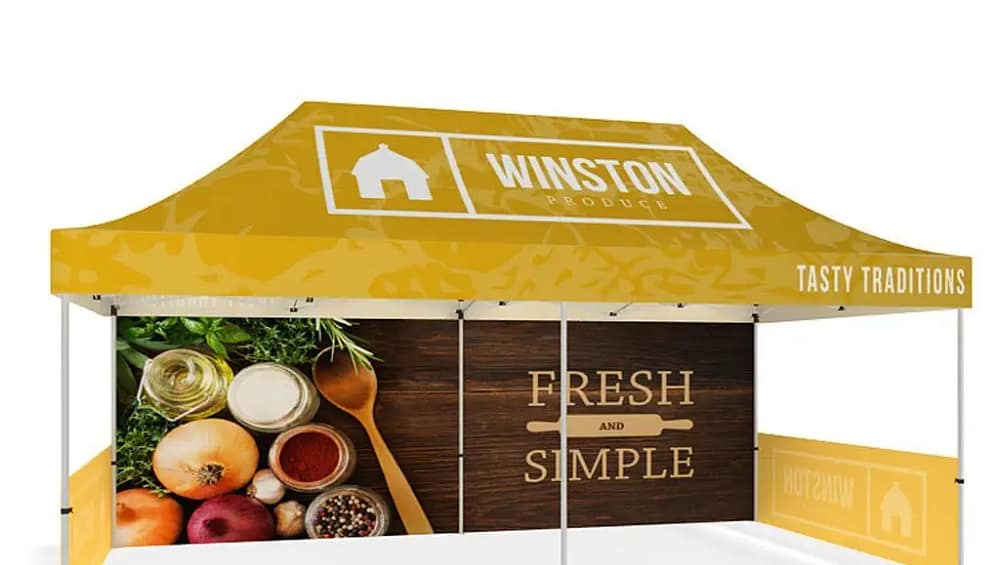
Open Front Market Stall Layout
One of the most widely used layouts for markets is the open front design. In this configuration, the tent remains open at the front while the back and sides may remain partially enclosed or open depending on the exhibitor’s preference.
This layout works particularly well for markets and retail-style events where businesses want customers to approach easily from the main walkway. Tables or product displays are typically positioned along the back wall or slightly inside the tent.
An open front Outdoor Pop-up Tent layout encourages visitors to step closer to the stall and view the products without feeling restricted by barriers. This welcoming setup is ideal for craft vendors, food sellers, and retail exhibitors.
U-Shaped Display Layout for Product Showcases
The U-shaped layout is popular among exhibitors who want to display a large range of products. In this setup, display tables or shelving units are placed along the back and both sides of the tent, forming a U-shaped arrangement.
This layout allows visitors to enter the tent space while browsing products positioned along the surrounding displays. It creates a natural browsing experience similar to walking through a small retail space.
Businesses using Outdoor Pop-up Tents for product exhibitions often prefer this layout because it maximises display space while keeping the centre area open for customer movement.
Front Counter Layout for Customer Interaction
The front counter layout is commonly used for businesses that sell products directly or distribute samples during events. In this setup, a counter or table is positioned at the front of the tent while staff stand behind it.
This arrangement creates a clear interaction point where customers can approach, ask questions, and make purchases. The rest of the tent space behind the counter can be used for storage, product preparation, or additional displays.
For food vendors, beverage stalls, or promotional sampling campaigns, this Outdoor Pop-up Tent layout provides both efficiency and organisation.
Walk-Through Layout for High Traffic Events
At busy exhibitions and large festivals, creating smooth visitor flow is essential. A walk-through layout allows visitors to enter the tent from one side and exit through another, creating a natural path through the booth.
This configuration is especially effective for businesses conducting demonstrations, interactive displays, or product experiences. Visitors can move through the tent while engaging with different elements along the way.
By using an open Outdoor Pop-up Tent layout with minimal barriers, exhibitors can accommodate larger numbers of visitors without creating congestion.
Demonstration Layout for Interactive Displays
Some businesses attend exhibitions specifically to demonstrate products or services. In these situations, the tent layout needs to allow space for demonstrations while still accommodating visitors comfortably.
In a demonstration layout, the centre of the tent is kept open for product presentations or demonstrations. Display materials and branding elements are typically placed along the sides or back of the tent.
This layout works well for companies showcasing equipment, technology products, or cooking demonstrations at food festivals.
Branded Back Wall Layout for Maximum Visibility
For businesses that want strong visual branding, the back wall layout is a popular choice. In this design, a fully branded back wall is installed behind the display area while the front remains open to visitors.
The back wall serves as a large visual backdrop that highlights the company logo, promotional graphics, or product messaging. Visitors approaching the booth can easily recognise the brand from a distance.
When used with Outdoor Pop-up Tents, this layout creates a professional exhibition-style appearance that helps the booth stand out in crowded event environments.
Flexible Layouts for Different Event Spaces
One of the biggest advantages of outdoor pop-up tents is their adaptability. Exhibitors can easily adjust their layout depending on the available space, event type, and visitor traffic.
For example, a business might use an open market layout for weekend markets but switch to a branded back wall layout for trade exhibitions. The tent structure remains the same while the interior arrangement changes to suit the event.
This flexibility allows businesses to reuse the same equipment while still creating effective booth designs across multiple events.
Conclusion
Outdoor events offer businesses valuable opportunities to promote their brand, connect with customers, and showcase products in engaging environments. However, a well-planned booth layout plays a major role in determining how effectively visitors interact with the display.
Outdoor Pop-up Tents provide the flexibility needed to create many different booth layouts, including open market stalls, demonstration spaces, product display areas, and branded exhibition booths. By selecting the right layout for each event, businesses can improve visitor engagement while maintaining a professional presentation.