Outdoor events across Australia continue to grow in popularity. From food festivals and weekend markets to large promotional exhibitions, businesses rely on portable structures that can be installed quickly while still presenting a professional appearance. One of the most reliable solutions for outdoor event setups is Outdoor Pop-up Tents. These tents are designed to deliver a smooth setup experience while providing strong visual branding and practical shelter.
Why Outdoor Pop-up Tents Are Popular for Event Setups
When attending outdoor events, time and convenience are critical. Vendors often have a limited setup window before the event begins, which means equipment must be quick to assemble and easy to manage.
This is where Outdoor Pop-up Tents provide a major advantage. Their design focuses on simplicity and efficiency, allowing exhibitors to install the entire structure in just a few minutes.
Unlike traditional marquees or custom-built structures, pop-up tents require no tools and very few steps. This makes them ideal for businesses attending regular markets, trade shows, or promotional events across Australia.
Unpacking and Preparing the Tent Frame
The installation process begins by removing the tent components from the transport bag. Most professional pop-up tents are designed to fold compactly so they can be transported easily between events.
Once removed from the carry bag, the folded frame should be placed on a flat and open surface. This allows the structure to expand evenly and prevents the frame from twisting during setup.
Before expanding the frame, it is helpful to check that all parts are intact and ready for assembly. A quick inspection helps ensure the installation process runs smoothly.
Expanding the Frame Structure
The frame is the core support system of the tent. Modern pop-up tents typically use a scissor-style aluminium frame that expands outward with minimal effort.
To begin the setup process, two people stand at opposite corners of the frame and gently pull outward. As the frame expands, the internal support bars automatically form the roof structure.
This expansion stage creates the basic shape of the tent while keeping the legs at a lower height. Keeping the frame lowered makes it easier to attach the canopy in the next step.
Installing the Printed Canopy
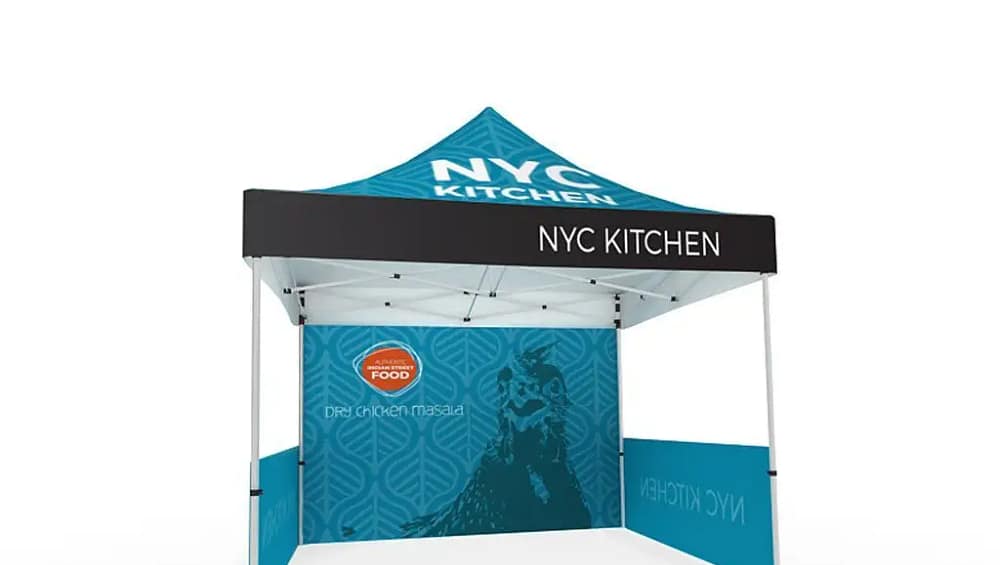
Once the frame is expanded, the canopy fabric can be installed. The canopy is typically custom printed with business logos, colours, and branding elements that help the booth stand out at events.
The canopy is placed over the top of the frame and aligned with the corners. Most Outdoor Pop-up Tents include Velcro straps or attachment points that secure the canopy directly to the frame.
Starting from the corners and working around the tent helps ensure the fabric is evenly distributed. A properly installed canopy creates a clean and professional look that enhances brand visibility across the event space.
Raising the Tent to Full Height
After the canopy is secured, the tent structure can be raised to its full height. Each leg of the frame usually includes a push-button locking mechanism that allows the tent to extend safely.
Exhibitors simply lift each corner leg until the locking pin clicks into place. This secures the structure and allows the canopy to stretch evenly across the roof.
Once all legs are extended and locked, the tent will stand firmly in its final position and provide a sheltered event space.
Securing the Tent for Outdoor Stability
Outdoor conditions can vary throughout the day, particularly at open-air events. Wind and uneven ground can affect temporary structures if they are not properly secured.
For this reason, tents should always be stabilised using weights, ground pegs, or anchor straps. Many Australian event organisers require tents to be secured as part of their safety guidelines.
Adding weights to each leg helps maintain stability and ensures the tent remains safe for both exhibitors and visitors.
Completing the Event Booth Setup
Once the tent structure is installed, businesses can begin arranging their event booth. Tables, product displays, seating, and promotional signage can be placed underneath the canopy to create a functional and inviting space.
Many exhibitors also add banner stands or flags nearby to increase brand visibility across the event area. Combining these elements with a branded canopy helps create a complete marketing environment.
This type of setup not only improves booth organisation but also encourages visitors to stop and engage with the business.
A Practical Event Solution for Australian Businesses
Outdoor exhibitions and markets require equipment that balances convenience, durability, and strong branding impact. Pop-up tents provide a reliable solution that allows businesses to create professional outdoor spaces quickly and efficiently.
With their expandable frame design and easy canopy installation, Outdoor Pop-up Tents make event preparation simple while still delivering a polished presentation.