Outdoor events across Australia vary widely in size and format. From small market stalls to large exhibition spaces, businesses require display solutions that can adapt to different booth layouts and marketing needs. A one-size-fits-all structure rarely works for every event. This is why Outdoor Pop-up Tents are designed in multiple sizes and configurations. These variations allow exhibitors to select a tent that fits their booth space, accommodates their products, and supports their marketing objectives.
Compact Tents for Small Booth Spaces
Smaller tent sizes are commonly used for markets, promotional stands, and community events where booth spaces are limited. These compact structures are easy to transport and quick to assemble, making them ideal for businesses that frequently move between events.
Compact Outdoor Pop-up Tents typically provide enough space for a table display, product samples, and marketing materials. Vendors at farmers markets or craft fairs often choose smaller tents because they fit comfortably within standard market stall dimensions.
Despite their smaller footprint, these tents still provide the essential benefits of shade, shelter, and clear brand visibility.
Standard Event Tent Sizes for Versatile Use
Standard-sized tents are among the most popular options for exhibitors. These tents provide additional space for product displays, staff interaction areas, and promotional materials.
Businesses attending outdoor exhibitions or promotional events often choose mid-sized tents because they offer a balance between portability and functionality. Inside the tent, exhibitors can comfortably place display tables, shelving, product samples, or demonstration equipment.
This size category is particularly useful for businesses that participate in multiple types of events throughout the year.
Larger Tents for High Traffic Events
For events that attract large crowds, exhibitors may require more space to manage visitor interaction. Larger Outdoor Pop-up Tents provide expanded coverage that allows businesses to accommodate more customers under the canopy.
These larger configurations are often used for trade exhibitions, brand activations, and large promotional campaigns. The extra space allows companies to include multiple product displays, demonstration areas, and staff workstations.
The larger footprint also increases brand visibility, making it easier for visitors to spot the booth from across the event area.
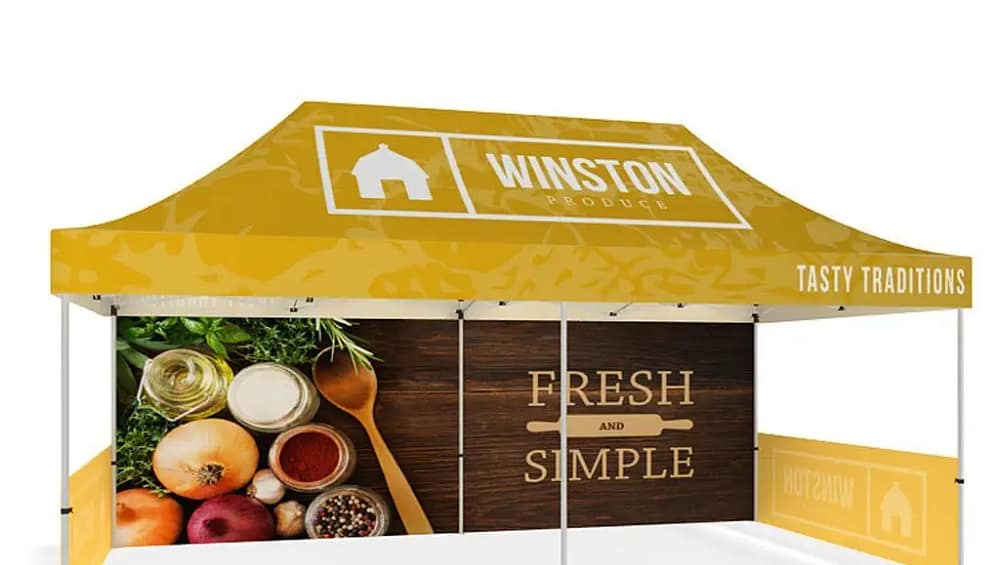
Configurations with Full or Half Walls
Beyond size, outdoor pop-up tents can also be configured with additional wall panels. These panels provide extra functionality depending on the needs of the exhibitor.
Common wall configurations include:
-
Full walls, which enclose the back or sides of the tent for increased privacy or wind protection
-
Half walls, which create a counter-style barrier for customer interaction
-
Branded walls, which display logos or promotional graphics
These wall options allow businesses to customise the tent layout while improving branding and visitor engagement.
Open Layout Designs for Easy Visitor Access
Some exhibitors prefer an open layout that allows visitors to approach the booth from multiple directions. Open tent configurations are ideal for busy events where visitor flow is high.
An open Outdoor Pop-up Tent layout removes side walls and keeps the space fully accessible. This design is often used at markets, festivals, and promotional events where businesses want to encourage spontaneous interaction with passing visitors.
The open structure creates a welcoming environment that invites people to step inside and explore the booth.
Custom Branding Options for Different Configurations
No matter the size or layout, branding remains one of the most important aspects of event displays. Outdoor pop-up tents can be customised with printed canopies, valances, and wall graphics that highlight the company’s brand identity.
Branded tents help businesses stand out in crowded event environments. The larger the tent or the more walls included in the configuration, the greater the opportunity for branding visibility.
This flexibility allows businesses to design their tent display to match their overall marketing strategy.
Combining Multiple Tents for Larger Event Spaces
For major events, some exhibitors combine multiple pop-up tents to create larger structures. By placing two or more tents side by side, businesses can expand their booth area significantly.
This approach is useful for companies that require space for product demonstrations, retail displays, customer seating, or hospitality areas. Multiple tents can also create a more visually impressive event presence.
Even when combined, the tents retain their portability and quick setup advantages.
Conclusion
Every outdoor event has different space requirements, visitor traffic levels, and marketing goals. Choosing the right tent size and configuration helps businesses create an effective and professional event display.
Outdoor Pop-up Tents offer a wide range of size options and layout configurations that adapt easily to different event environments. From compact tents for market stalls to larger branded structures for trade exhibitions, these tents provide the flexibility that exhibitors need.